China Top Solutions to Reduce Production Equipment Downtime?

Time:2026-06-01 Author:Liam
0%

In today's manufacturing landscape, reducing downtime and failure rate of production equipment is a critical challenge. According to a report by the International Society of Automation, unplanned downtime can cost manufacturers up to $260,000 per hour. This alarming statistic highlights the need for effective solutions in minimizing equipment failures.

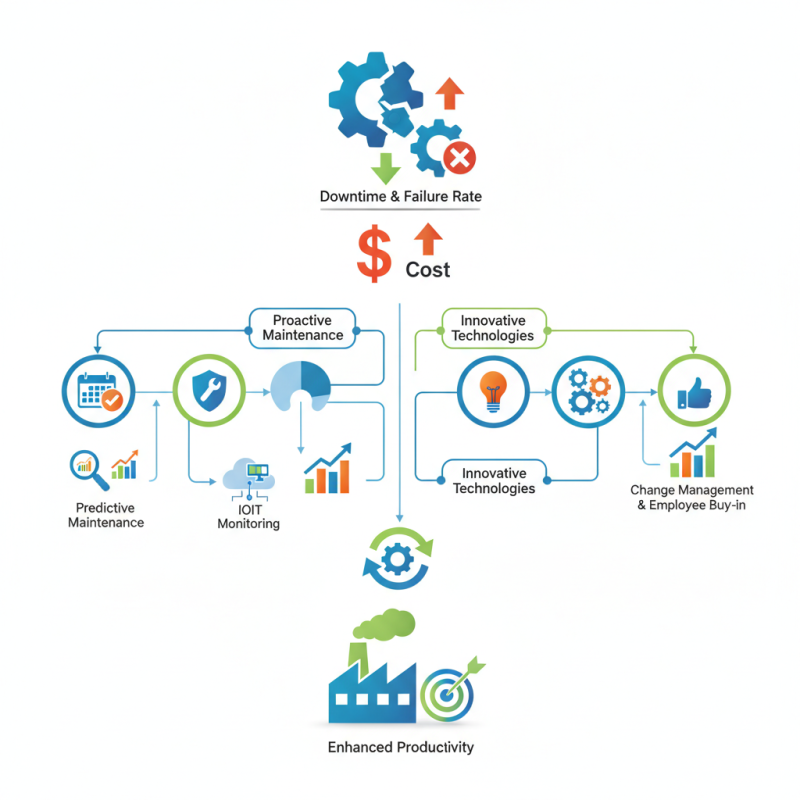
Industry expert Dr. Emily Chen, a leading researcher in operational efficiency, states, "To reduce downtime and failure rate of production equipment, proactive maintenance strategies are essential." Her insights emphasize the importance of transitioning from reactive to preventive measures. Many companies struggle to implement these practices effectively, often leading to inefficiencies and increased costs.

Innovative technologies, such as predictive maintenance and IoT-enabled monitoring, have emerged as vital strategies. They offer the potential to provide real-time insights into equipment health. However, successful implementation requires change management and employee buy-in. Reflection on existing processes reveals that many organizations fall short in fully leveraging these advancements. Assessing shortcomings is crucial to progress in reducing downtime and enhancing productivity.
China Top Solutions to Reduce Production Equipment Downtime?

Key Factors Contributing to Production Equipment Downtime in China

In China, several factors contribute to production equipment downtime. One primary cause is inadequate maintenance. Many factories overlook scheduled service, leading to equipment failures. This neglect often results in significant delays. It’s essential for operations to establish a robust maintenance routine. Regular inspections can drastically lower the risk of unexpected breakdowns.

Another critical factor is operator proficiency. In some cases, workers may lack training on complex machinery. This gap in skills can lead to human errors, causing equipment malfunctions. Improving training programs can enhance workforce competency. However, it requires investment and commitment from management, which may sometimes be lacking.

The integration of outdated technology also plays a role. Some factories continue to use legacy systems that are less efficient. This choice can lead to compatibility issues and frequent breakdowns. While modernization efforts are costly, they are necessary for long-term success. Reflection on current practices is vital to reduce these downtimes and improve production efficiency.

Best Practices for Effective Maintenance Strategies in Manufacturing

Effective maintenance strategies are essential in minimizing production equipment downtime in manufacturing. According to a study by the Aberdeen Group, organizations that implement proactive maintenance practices see up to a 30% reduction in equipment failures. Regular inspections, predictive analytics, and training for staff can significantly impact overall efficiency.

Scheduled maintenance and real-time monitoring are critical elements. Data from the U.S. Department of Energy suggests that poor maintenance practices can lead to productivity losses as high as 20%. Simple tasks, like grease application, are often neglected. They can lead to equipment overheating and failure, which affects output. Establishing a routine and addressing minor issues promptly can maintain operations without significant interruptions.

Moreover, the human factor plays a significant role. Employees may overlook proper maintenance due to lack of training or awareness. Regular workshops can cultivate a culture of accountability. Finally, while technology aids in monitoring systems, relying solely on it may prove detrimental. Comprehensive maintenance requires a balance between human oversight and automated systems. Addressing these gaps will lead to more resilient manufacturing environments.

Innovative Technologies for Minimizing Equipment Downtime

Minimizing equipment downtime is critical for manufacturing efficiency. Innovative technologies are stepping in to address this challenge in China. According to a recent report by the China Manufacturing Association, equipment downtime can cost industries approximately $6,000 per minute. This staggering figure highlights the urgency of implementing effective solutions.

One promising approach is predictive maintenance, leveraging AI and machine learning. These technologies analyze historical data to forecast potential failures. Reports suggest that predictive maintenance can reduce downtime by up to 30%. Additionally, Internet of Things (IoT) sensors monitor real-time performance, enabling quicker responses to issues as they arise.

However, the integration of these technologies faces hurdles. Many companies lack the necessary infrastructure. Investment in training is also essential, as employees need to understand these new systems. A study from the International Journal of Production Research indicated that only 20% of manufacturers fully utilize digital tools for maintenance. This gap reflects the need for a cultural shift towards embracing innovation. Addressing these challenges could significantly enhance productivity across various sectors.

Training and Skill Development for Workforce Efficiency

Training and skill development are vital for reducing production equipment downtime in China. A skilled workforce can respond quickly to equipment failures. In addition, well-trained employees can perform maintenance proactively. This approach minimizes the risk of unexpected breakdowns.


One of the most effective strategies is ongoing training programs. These programs should focus on hands-on experience with the equipment. Encourage employees to share their knowledge. Peer learning often highlights practical issues. It fosters a culture of continuous improvement.


Tips: Regular workshops can enhance problem-solving skills. Maintain an open dialogue about equipment challenges. This will build a team that adapts quickly. Lastly, recognize that even skilled workers may face difficulties. Learning from mistakes is crucial for growth. A supportive environment encourages innovation and resilience. Emphasizing these aspects will ultimately strengthen production efficiency and reduce downtime.

Impact of Real-time Monitoring on Equipment Performance Optimization

Real-time monitoring has emerged as a game-changer in optimizing equipment performance. Sensors and data analytics tools are now capable of providing instant feedback on machinery. This technology allows for immediate identification of anomalies. As equipment operates, any deviation from standard performance can be detected promptly. This ensures that adjustments can be made before issues escalate into costly downtimes.

However, reliance on real-time data comes with its own set of challenges. Not all machinery is equipped for advanced monitoring. Implementing new systems requires significant investment and training. Additionally, manufacturers may encounter data overload. Sifting through immense amounts of information can be overwhelming. It becomes essential to establish priorities. Key performance indicators should guide the focus on what truly matters.

Maintenance schedules can be refined through accurate monitoring. Predictive analytics can forecast when equipment is likely to fail. Companies can then address potential failures proactively. Yet, there’s a risk of complacency. Overdependence on technology might lead to neglect of basic maintenance practices. Balancing real-time monitoring with traditional techniques is vital for sustainability. Efforts must focus on a comprehensive approach that brings out the best in both methodologies.

FAQS

: What causes production equipment downtime in manufacturing?

: Inadequate maintenance and operator proficiency are primary causes. Neglecting maintenance can lead to equipment failures.

How can regular maintenance practices improve efficiency?

Regular inspections and proactive maintenance reduce equipment failures by up to 30%. They help avoid unexpected breakdowns.

Why is operator training important?

Workers lacking training may make mistakes. Improved training enhances skills and reduces the risk of human error.

How do outdated technologies affect production?

Using legacy systems can cause frequent breakdowns. Upgrading technology is costly but necessary for efficiency.

What role does human oversight play in maintenance?

Human oversight is essential alongside technology. It ensures proper maintenance and addresses gaps in automated systems.

What impact does neglecting simple maintenance tasks have?

Overlooking simple tasks, like lubrication, can lead to equipment failure. Addressing these minor issues promotes smoother operations.

How can predictive maintenance help minimize downtime?

Predictive maintenance uses data to foresee potential failures. It can reduce downtime significantly, but infrastructure investment is needed.

Why do many manufacturers struggle with digital tools?

Only around 20% of manufacturers fully utilize digital maintenance tools. Lack of training and cultural resistance hinder progress.

What kinds of training programs should be implemented?

Regular workshops can raise awareness and skills. They help cultivate a culture of accountability in equipment maintenance.

What are the consequences of poor maintenance practices?

Poor maintenance can lead to productivity losses of up to 20%. Regular maintenance routines can prevent significant disruptions.

Conclusion

This article explores effective strategies to reduce downtime and failure rate of production equipment in China. It starts by identifying key factors that contribute to equipment downtime, such as inadequate maintenance and outdated technologies. The discussion then shifts to best practices for maintenance strategies, emphasizing the importance of regular inspections and proactive upkeep to enhance reliability.

Additionally, the article highlights innovative technologies that can significantly minimize equipment downtime, including automation and predictive maintenance tools. Training and skill development for the workforce are also critical components, ensuring that employees are equipped to handle equipment efficiently. Lastly, the impact of real-time monitoring technologies is examined, showing how they can optimize equipment performance and provide crucial data for decision-making, ultimately leading to reduced downtime and increased productivity in manufacturing operations.

Liam

Liam

Liam is a dedicated marketing professional with a profound expertise in the industry, where he excels at highlighting the unique advantages of our core products. With a keen understanding of market trends and consumer needs, Liam frequently updates our company’s professional blog, providing......