How to Choose China Top Glass Drilling Machines by Thickness?

Time:2026-09-08 Author:Madeline
0%

Choosing a top Chinese glass drilling machine begins with one practical question: what thickness must it process every day? A 3 mm mirror, a 12 mm tempered panel, and a 25 mm laminated unit demand different drilling methods. Machine selection should consider spindle power, drill-bit cooling, feed control, table stability, and hole diameter. Price alone can mislead.

Dr. Wei Zhang, a glass-processing engineer specializing in production equipment, explains: “Thickness is only half the decision; hole quality and production rhythm matter just as much.” This view supports a careful approach to How to select glass drilling machines for different thicknesses. Thin glass needs gentle entry, precise speed control, and strong vibration resistance. Otherwise, the surface may chip around the hole. Thicker glass requires greater torque, deeper cooling, and a more stable clamping system. Laminated glass adds another challenge because interlayers can pull, smear, or distort during drilling.

The following guide compares Chinese drilling machine options by glass thickness, production volume, and required finish. It examines single-head and double-head designs, automatic positioning, laser alignment, coolant circulation, and after-sales support. These details are easy to overlook. They often decide the real operating cost.

A reasonable choice is not always the most powerful machine. An oversized spindle may waste energy and reduce control on thin sheets. A low-cost model may appear attractive, yet unstable pressure can create costly rejects. This is where buyers must reflect on their own workshop conditions, not only supplier specifications. Glass type, hole location, daily output, operator skill, and maintenance access should all shape the final decision.
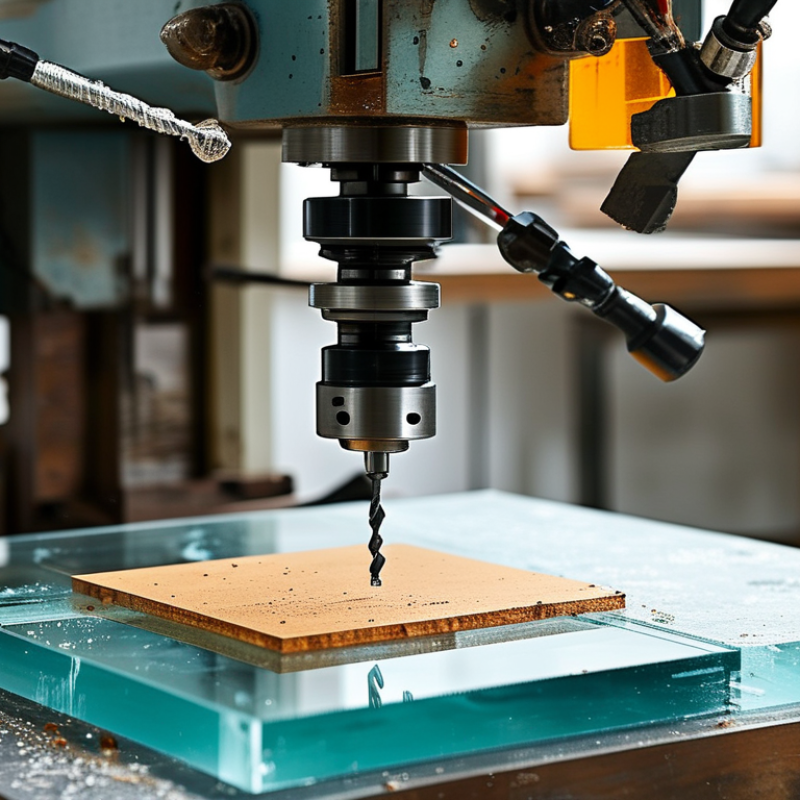
How to Choose China Top Glass Drilling Machines by Thickness?

Glass Drilling Machine Types and Their Suitable Glass Thicknesses

Choosing China’s Top Glass Drilling Machines by Thickness

Glass drilling machines should match both glass thickness and production volume. Manual machines suit occasional work on 3–6 mm glass. They offer control, but operators must measure every hole carefully. Small errors become visible around polished edges.

Semi-automatic machines usually handle 4–12 mm glass efficiently. They work well for shelves, doors, partitions, and bathroom panels. Pneumatic pressure reduces operator fatigue. However, unstable air pressure may cause chipped holes. Check the compressor before judging the machine.

CNC drilling centers fit demanding production, commonly from 4–19 mm glass. Some heavy-duty models process thicker panels, sometimes beyond 25 mm. Multi-spindle machines improve speed when hole patterns repeat. They are less flexible for unusual designs. Insulating or laminated glass needs specialized support and drilling settings. The glass must remain stable during entry and exit. Water cooling protects the drill and limits thermal cracking. Hole diameter, edge distance, and glass coating also affect selection. Thickness alone is not enough.

A practical trial should use your actual glass. Ask for test holes near corners and panel centers. Inspect both surfaces under strong side lighting. A clean hole may still hide internal stress. My first selection mistake would be trusting a catalog range without testing production speed. That shortcut often ignores breakage, setup time, and operator skill.

Key Factors for Matching Machine Capacity to Glass Thickness

How to Choose China’s Top Glass Drilling Machines by Thickness?
Key Factors for Matching Machine Capacity to Glass Thickness

Glass thickness should guide the machine choice, not marketing labels. Measure the thinnest and thickest panels in your production range. A machine rated for 12 mm glass may struggle with laminated panels, coatings, or repeated deep drilling. Check the actual working capacity, spindle travel, and table clearance before purchasing.

For thin glass, stable speed control matters more than extreme motor power. Excessive pressure can create edge chips or invisible cracks around the hole. For glass between 10 and 19 mm, choose a rigid frame, adjustable feed, and reliable water cooling. Thick or laminated glass needs stronger spindle torque and longer drilling travel. Confirm that the chuck accepts the required diamond bit diameter.

I have inspected drilling results where the machine capacity looked sufficient, but the cooling flow was too weak. The first holes appeared clean. Later holes showed heat marks and rough edges. That detail is easy to miss. Request test drilling with your actual glass, including its final thickness and coating. Record drilling time, hole diameter, edge quality, and breakage rate. A slower machine may be more dependable for fragile panels. Capacity claims still need verification.

How to Choose China Top Glass Drilling Machines by Thickness? - Key Factors for Matching Machine Capacity to Glass Thickness

Glass Thickness Typical Glass Applications Recommended Machine Configuration Recommended Spindle Power Typical Spindle Speed Range Practical Hole Diameter Range Typical Feed Rate Cooling and Drilling Method Key Capacity Requirements
3–6 mm Picture glass, cabinet glass, mirrors, and light decorative panels Single-spindle machine with precision worktable and adjustable speed control 0.75–1.5 kW 1,500–3,000 rpm 4–40 mm 30–100 mm/min Continuous water cooling; light pressure and stable support are essential Low vibration, accurate positioning, and a fine-feed adjustment system
6–10 mm Furniture glass, shower panels, interior partitions, and standard mirrors Single- or twin-spindle machine with pneumatic clamping and programmable positioning 1.5–2.2 kW 1,200–2,500 rpm 6–60 mm 25–80 mm/min Water-fed diamond tooling with controlled entry and exit speeds Rigid table, reliable clamping, and sufficient clearance for larger workpieces
10–15 mm Balustrades, doors, architectural panels, and laminated glass components Twin-spindle machine with opposed drilling or synchronized upper-and-lower tooling 2.2–4.0 kW 900–2,000 rpm 8–80 mm 20–60 mm/min Continuous flood cooling; drilling from both sides helps reduce breakout High frame rigidity, accurate spindle alignment, and strong workpiece support
15–19 mm Heavy architectural glass, thick table tops, and structural glazing panels Heavy-duty twin-spindle machine with hydraulic or pneumatic clamping 4.0–5.5 kW 700–1,500 rpm 10–100 mm 15–45 mm/min High-flow water cooling with filtration and recirculation capability Reinforced machine bed, higher load capacity, and precise depth control
19–25 mm Extra-thick laminated panels, heavy furniture glass, and specialized architectural work Industrial twin-spindle or multi-spindle machine with automated positioning 5.5–7.5 kW 500–1,200 rpm 12–120 mm 10–35 mm/min High-volume coolant delivery, staged drilling, and controlled pressure throughout the cycle High structural stiffness, large table capacity, and overload protection
25–40 mm Special-purpose thick laminated or bonded glass assemblies Custom heavy-duty CNC drilling system with multi-stage feed control 7.5–11.0 kW 300–900 rpm 15–150 mm 5–25 mm/min Dedicated high-flow cooling, coolant filtration, and carefully controlled drilling cycles Engineered load support, custom tooling, high alignment accuracy, and process monitoring
Selection note: These are practical reference ranges for water-cooled diamond drilling of flat glass. The required machine capacity also depends on glass type, laminated construction, hole diameter, hole-to-edge distance, workpiece size, production volume, tooling quality, and whether the glass is drilled before tempering. Tempered glass should generally be drilled before the tempering process because post-tempering drilling can cause breakage.

How Drill Bit Size and Spindle Power Affect Drilling Results

How to Choose China Top Glass Drilling Machines by Thickness?

How Drill Bit Size and Spindle Power Affect Drilling Results

Glass thickness should guide machine selection, but it is not the only factor. A thin 4 mm panel may need less spindle power, yet poor speed control can still cause chips. For 12 mm or thicker glass, frame rigidity and stable water cooling become more important. In production, I check the machine under the actual load, not only its specification sheet. A neat calculation is not enough.

Drill bit size directly affects cutting resistance and heat. A small diamond core bit usually removes less material and needs less torque. Larger bits require steadier spindle power, slower feeding, and better coolant flow. If the operator pushes too hard, the glass may develop edge damage or microcracks. Keep it steady. I usually test one hole on spare glass before setting the full batch.

Spindle power should match both thickness and hole diameter. More power does not automatically create cleaner holes. Excessive force can overload the bit, while insufficient torque may cause speed drops and uneven cutting. Variable-speed control helps adjust performance across different glass types. Monitor vibration, coolant flow, and the sound of the spindle during drilling. These details often reveal problems before visible damage appears. I have seen a powerful machine produce rough holes because the bit was worn. Before purchase, confirm the machine’s working stroke, cooling system, and support table. Also verify whether the glass is laminated or tempered, because its processing requirements differ.

Step-by-Step Guide to Choosing a China Glass Drilling Machine

Choosing a China glass drilling machine should begin with the glass, not the machine price. Measure thickness, coating, size, and whether the panel is tempered, laminated, or insulated. A 4 mm sheet needs different spindle control from a 19 mm laminated panel. Tempered glass must be drilled before tempering. Never drill it afterward.

Use a step-by-step check. First, match the machine’s working range with your regular orders. For 3–6 mm glass, prioritize stable speed control and low vibration. For 8–12 mm sheets, check spindle torque, coolant delivery, and table support. Thick laminated glass needs stronger clamping and controlled feed pressure. Ask for test drilling with your own glass. A polished 30 mm hole should show no edge chipping. Measure the result.

According to IMARC Group’s 2024 flat glass market report, global demand continues growing, with construction remaining a major application. That growth increases pressure for repeatable processing, not simply higher speed. The ISO 1288 glass strength testing series also shows why edge quality matters during performance evaluation. Confirm spindle runout, drilling tolerance, spare-part availability, electrical compatibility, and operator training. Request inspection records and video evidence from actual production. I once focused too heavily on maximum diameter. That was a mistake. Production stability mattered more. Leave space for maintenance, because a compact workshop can become difficult to service.

How to Choose China Top Glass Drilling Machines by Thickness?

Select a glass drilling machine according to the thickest glass you regularly process. The chart shows common nominal architectural and furniture glass thicknesses, from thin panels to heavy-duty applications.

For reliable production, choose a machine whose rated capacity is higher than your maximum glass thickness. Thin glass generally requires precise clamping and lower feed pressure, while thicker glass benefits from stronger spindle stability, effective water cooling, and diamond drilling tools.

Safety, Precision, and Maintenance Requirements by Glass Thickness

How to Choose China Top Glass Drilling Machines by Thickness?

Glass thickness changes the machine’s safety, precision, and maintenance demands. For glass under 6 mm, choose gentle feed control and low spindle vibration. Thin sheets can chip when clamping pressure is uneven. For 6–12 mm glass, prioritize stable torque, adjustable speed, and automatic coolant delivery. Above 12 mm, the machine needs stronger rigidity and deeper drilling capacity. Do not guess.

Precision begins with spindle runout, not marketing claims. Ask suppliers for measured runout results under operating conditions. ISO 230-1 provides methods for evaluating machine-tool accuracy and repeatability. A practical test should check hole diameter, edge chipping, and positional deviation across several thicknesses. One successful sample proves little. Temperature, drill wear, and operator technique can change the result.

Safety requires controlled dust, water, guarding, and emergency access. OSHA’s respirable crystalline silica rules set an 8-hour permissible exposure limit of 50 μg/m³ and an action level of 25 μg/m³. Wet drilling and effective extraction help control airborne particles. ISO 12100 recommends risk assessment before selecting safeguards. Maintenance should include daily coolant inspection, weekly guide-rail cleaning, and scheduled spindle checks. Thick glass creates more heat and debris. Filters may clog faster than expected. A maintenance plan that ignores real production dust is incomplete. Some buyers also overlook training records and lockout procedures, although these details often determine whether precision lasts.

FAQS

: Which machine suits occasional drilling on thin glass?

: Manual machines suit occasional work on 3–6 mm glass. They offer direct control. Measure every hole carefully. Small errors show around polished edges.

When is a semi-automatic drilling machine suitable?

Semi-automatic machines commonly handle 4–12 mm glass. They suit shelves, doors, partitions, and bathroom panels. Pneumatic pressure reduces operator fatigue. Check air pressure first.

What thickness range suits CNC drilling centers?

CNC centers commonly process 4–19 mm glass. Some heavy-duty models handle panels above 25 mm. They suit demanding, repeated production. Unusual patterns may reduce their flexibility.

Is glass thickness the only selection factor?

No. Consider hole diameter, edge distance, coatings, and panel stability. Insulating and laminated glass need specialized support. Thickness alone misleads.

What features matter for thin glass?

Choose gentle feed control and low spindle vibration. Uneven clamping pressure can chip sheets below 6 mm. Extreme motor power is unnecessary. Control matters more.

What features matter for glass between 10 and 19 mm?

Select a rigid frame, adjustable feed, and reliable water cooling. Stable torque supports deeper drilling. Cooling limits heat marks and thermal cracks. Weak cooling causes trouble later.

How should a buyer test drilling performance?

Use the actual production glass. Request holes near corners and panel centers. Inspect both surfaces under strong side lighting. Record drilling time, diameter, edge quality, and breakage.

What maintenance and safety practices are necessary?

Inspect coolant daily and clean guide rails weekly. Schedule regular spindle checks. Thicker glass creates more heat and debris. Filters may clog faster.Use guarding, water control, extraction, and emergency access. Follow local workplace safety requirements. Keep training records and lockout procedures. These details are easy to overlook.

Can a machine rated for 12 mm glass process every 12 mm panel?

Not always. Laminated glass, coatings, and repeated deep drilling increase difficulty. Confirm spindle travel, table clearance, torque, and chuck size. Test before trusting the catalog.My first mistake was trusting the stated range. The samples looked clean. Production speed and breakage told another story.

Conclusion

Choosing the right China glass drilling machine depends primarily on the thickness, size, and type of glass being processed. How to select glass drilling machines for different thicknesses starts with identifying whether the application involves thin decorative glass, medium architectural panels, or thick laminated and industrial glass. Small and medium thicknesses may require compact machines with moderate spindle power, while thicker glass needs stronger structures, stable feeding systems, deeper drilling capacity, and effective cooling. Drill bit diameter, cutting speed, spindle torque, and vibration control also directly influence hole quality, edge smoothness, and drilling efficiency.

A practical selection process includes confirming the maximum glass thickness, required hole sizes, production volume, automation level, and available workspace. The machine should provide accurate positioning, adjustable drilling parameters, and reliable coolant circulation. Safety guards, emergency controls, and secure glass support are essential for every thickness. Regular inspection of drill bits, spindle components, cooling systems, and alignment mechanisms helps maintain precision and extend service life. By matching machine capacity with material requirements, users can achieve consistent results while reducing breakage, maintenance costs, and production delays.

Madeline

Madeline

Madeline is a dedicated marketing professional with a wealth of expertise in our company's core offerings. With a keen understanding of the industry, she brings a unique perspective to her role, consistently delivering high-quality content that highlights the superior aspects of our products. As......