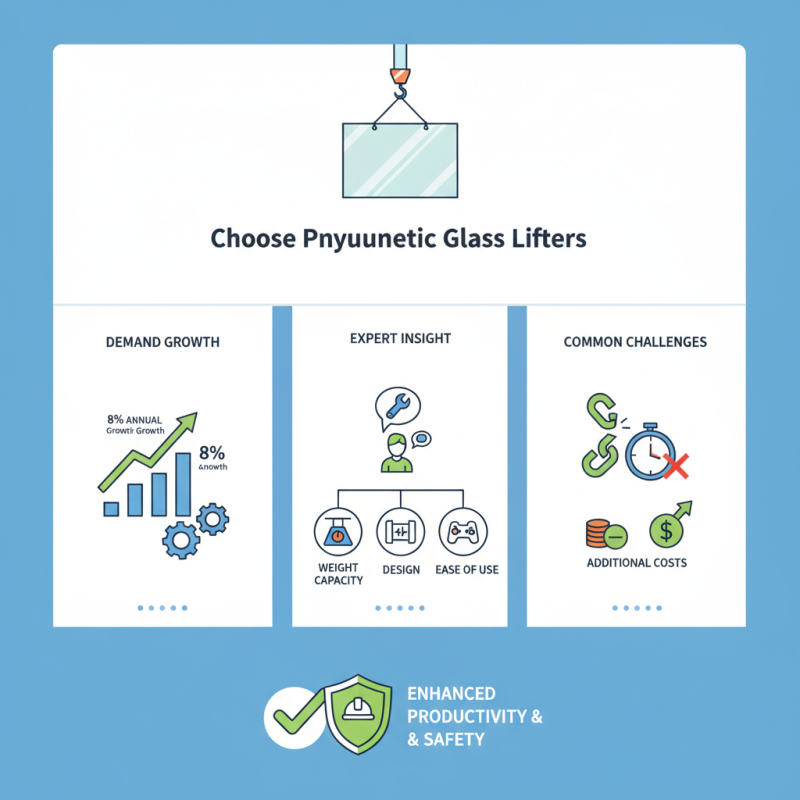
Choosing the right Pneumatic Glass Lifter is crucial for efficiency in construction and installation. According to a recent industry report by Market Research Future, the demand for pneumatic lifting equipment is projected to grow by 8% annually over the next five years. This highlights the growing importance of reliable tools in heavy-duty tasks.
Expert John Stevens, a well-known authority in the lifting equipment sector, states, “Selecting the right Pneumatic Glass Lifter can prevent costly mistakes.” His insight underscores the need for careful evaluation of your specific needs. Factors such as weight capacity, design, and ease of use must be considered.
Many users encounter challenges when the wrong lifter is chosen. These mistakes can lead to delays and additional costs. Reflecting on these issues will help you make a better-informed decision. Ultimately, the right Pneumatic Glass Lifter can enhance productivity and safety on the job site.
Pneumatic glass lifters are essential tools for handling large panes safely. They use air pressure to lift and move glass, reducing manual labor and minimizing injury risks. One key feature is suction capability. A strong suction cup ensures secure attachment. This is vital when dealing with large or heavy pieces. The design should also prioritize stability and ease of use during operation.
Another important aspect is portability. A lightweight model can be moved easily on-site. It saves time and effort compared to bulkier options. Adjustable handles or wheels can enhance maneuverability. Operators need to consider the lifter's load capacity. Choosing one that suits their typical glass sizes is crucial. It’s common to overlook these factors. Neglecting them can lead to accidents or inefficient work processes.
Moreover, durability plays a significant role. Look for models made from quality materials. They should withstand regular use without frequent repairs. However, some lifters may not perform well in extreme weather conditions. Operators should reflect on their specific needs. Assessing the features and limitations will help in making the best choice.
When selecting a pneumatic glass lifter, begin by identifying your specific requirements. Consider the size and weight of the glass you need to handle. There are various types of glass, from small window panes to large sheets used in facades. Knowing your project's scale is crucial. Weight limits vary significantly between lifters. You might expect one to lift a heavy glass sheet, but will it hold up under pressure?
Next, think about the environment where you'll use the lifter. Will it be inside a workshop or on a construction site? Factors like uneven surfaces and outdoor conditions can impact your choice. Adjustability is another key aspect. If you have varying sizes of glass, a lifter with versatile attachments could save you time and effort. Don't overlook safety features as well. A lifter may look impressive, but its handling capacity should never be compromised.
Lastly, reflect on any past experiences with glass lifting equipment. Perhaps you've encountered issues like slipping or insufficient grip. Analyzing these moments can inform your decision. Finding the right pneumatic lifter means considering both potential challenges and your unique needs. This thoughtful approach ensures that you select a tool that enhances productivity without sacrificing safety.
When selecting a pneumatic glass lifter, one must consider various types available in the market. Essentially, pneumatic glass lifters fall into two primary categories: vacuum lifters and sling lifters. Vacuum lifters use suction to adhere to smooth surfaces, providing a strong grip. Studies indicate that they can lift weights exceeding 2,000 pounds. However, they may struggle with textured or uneven surfaces.
Sling lifters, on the other hand, utilize webbing or slings to hold glass sheets. These devices distribute weight more evenly across the glass, decreasing the risk of breakage. Their versatility allows lifting on rougher surfaces, but they may require additional handling precision. Industry reports suggest that while vacuum lifters offer better efficiency for flat surfaces, sling lifters often provide greater safety for delicate operations.
Cost is another critical factor to consider. Vacuum lifters are typically more expensive due to their advanced technology. Budget constraints may lead some to opt for sling lifters, which perform adequately but may not have the same lifting capacity. Users must reflect on their specific needs carefully. Proper evaluation will ensure that the chosen pneumatic glass lifter aligns with both operational requirements and budget limitations.
| Type | Lift Capacity | Weight | Power Source | Typical Use |
|---|---|---|---|---|
| Standard Pneumatic Lifter | 500 kg | 80 kg | Compressed Air | Construction, Glazing |
| Mini Pneumatic Lifter | 250 kg | 40 kg | Compressed Air | Small Installations, Indoor Work |
| Heavy-Duty Pneumatic Lifter | 1000 kg | 120 kg | Compressed Air | Large Panels, Industrial Use |
| Glass Handling Robot | 800 kg | 200 kg | Battery & Compressed Air | Automated Installations, Factory Use |
| Portable Pneumatic Lifter | 300 kg | 60 kg | Compressed Air | Site Work, Quick Jobs |
When selecting a pneumatic glass lifter, assessing quality and durability is crucial. A robust lifter can handle heavy materials effectively. According to industry data, pneumatic lifters can reduce the risk of accidents by up to 70% when properly used. This statistic underscores the importance of choosing a reliable tool.
One key factor to consider is the materials used in construction. Lifters made from high-grade aluminum often weigh less and resist corrosion better than those built from cheaper metals. For instance, professionals note that lifters with a weight capacity of over 300 pounds should have reinforced lifting arms. This makes them safer for handling large glass panels. However, some models may compromise on material quality for cost, which could lead to failures over time.
Another important aspect is the warranty offered. A longer warranty often indicates greater manufacturer confidence in durability. It’s essential to read the fine print and understand what is covered. Buyers should reflect on their project demands. Choosing a lifter that fails under heavy use can result in wasted time and money. In essence, a well-thought-out selection process can lead to better performance and longevity.
When selecting a pneumatic glass lifter, consider your budget and cost-effectiveness. Research indicates that businesses can save between 20% to 30% by choosing the right model. The initial investment is crucial, but so are the long-term operational costs. Maintenance can account for 15% of lifetime costs, making it vital to assess reliability upfront.
Evaluate features that might inflate costs without adding value. For instance, advanced automation can seem appealing but not always necessary. Many projects do not require high-tech features. Simpler models can reduce costs significantly. Data from industry reports show that a basic model can start as low as $1,500, while more complex variants may exceed $5,000.
Think about your specific needs, too. High-capacity lifters may sound impressive but could be overkill for small jobs. Moreover, consider potential hidden costs, like energy consumption. Some pneumatic glass lifters could be less energy-efficient, increasing long-term expenses. A balanced approach to selecting a glass lifter ensures you find a model that meets both budget requirements and operational needs.
: Assess the size and weight of the glass you'll handle. This is essential for the lifting process.
Different environments, like workshops or construction sites, affect which lifter to choose. Uneven surfaces can be challenging.
They are vacuum lifters and sling lifters. Each has its own strengths and weaknesses for different tasks.
Vacuum lifters rely on suction, which may not work well with textured or uneven surfaces.
Sling lifters distribute weight evenly and can work better on rough surfaces, improving safety.
Vacuum lifters tend to be more expensive due to advanced technology. Budget plays a significant role in decision-making.
High-grade aluminum is ideal. It’s lightweight and resists corrosion, enhancing durability.
A longer warranty often reflects the manufacturer's confidence in the product's quality and longevity.
They may fail under heavy use, resulting in accidents, lost time, and additional costs.
Reflecting on past issues, like slipping, helps inform better decisions and promotes safer operation.
When selecting the best Pneumatic Glass Lifter for your needs, it’s essential to understand its key features and benefits. Pneumatic glass lifters offer significant advantages, such as ease of operation and enhanced safety for handling large and heavy glass panels. Before making a decision, identify your specific requirements by considering factors like the weight and size of the glass you will be lifting, as well as the particular environment in which the lifter will be used.
Comparing different types of pneumatic glass lifters is crucial to ensure you select the right model. Evaluate the quality and durability of the options available by looking into their construction materials and design. Additionally, assess your budget and consider the cost-effectiveness of each model, ensuring that you choose a pneumatic glass lifter that balances performance with affordability, ultimately meeting your operational needs and financial constraints.

Yabo CNC