How to Compare Manual and Automatic Glass Cutting?

Time:2026-11-07 Author:Madeline
0%

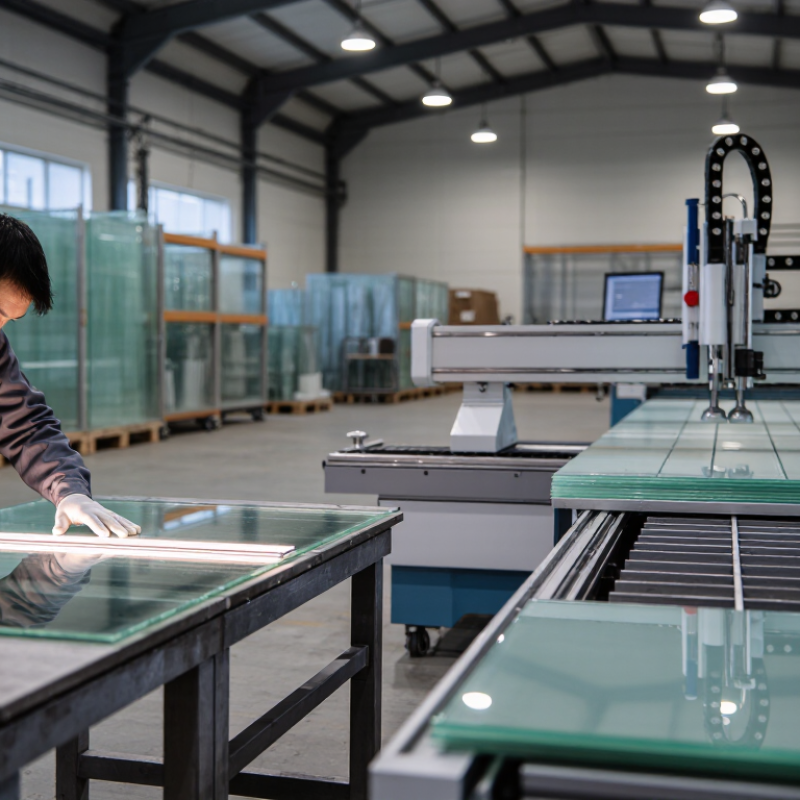
Choosing the right glass-cutting method affects more than speed. It can shape edge quality, material waste, labor needs, and daily production capacity. What is the difference between manual and automatic glass cutting? The answer depends on the work: a small workshop handling custom pieces has different needs from a factory processing repeated sizes. A hand cutter, straightedge, and steady pressure may be enough for a single pane. A production line may use a programmed cutting table, vacuum handling, and sensors to keep each score consistent.

Manual cutting offers direct control and a relatively simple setup. It also depends heavily on operator skill. A slight change in pressure can leave a weak score or a rough break. Automatic systems can improve repeatability and throughput, especially across large batches. Yet they require investment, setup, maintenance, and trained operators. Automation does not remove every source of error. Poorly calibrated equipment or unsuitable glass can still cause defects.

As no source or verifiable expert quotation was provided, this introduction avoids attributing an invented statement to a named specialist. The comparison should instead focus on measurable factors: cut tolerance, break quality, batch size, labor time, and total operating cost. Real shop-floor results matter. A machine’s rated speed alone tells only part of the story. A careful assessment should also consider setup time, rejected panes, and the practical skills available to the team. The choice is not always obvious. Sometimes the simplest method is the better fit.
How to Compare Manual and Automatic Glass Cutting?

How Manual and Automatic Glass Cutting Work

Manual glass cutting begins with a measured sheet, a straightedge, and a carbide or steel scoring wheel. The operator applies steady pressure, making one continuous score across the surface. A controlled tap or light bend then opens the glass along that line. Too much pressure can create a ragged edge; too little may leave an incomplete score. The result depends heavily on the operator’s feel.

An automatic cutting table follows the same basic principle, but sensors and programmed controls guide the work. The sheet is positioned on an air-cushioned bed, and software maps cut lines to reduce offcuts. A powered head scores the glass, while breaking bars or separation equipment help divide it. It is precise, but not magic. Poor alignment, worn tools, or a flawed sheet can still cause waste.

The European Commission’s 2013 Glass Manufacturing BREF describes float-glass lines with typical capacities of roughly 500–800 tonnes per day. That figure describes furnace output, not cutter speed, a distinction that is easy to miss. In practice, manual cutting suits occasional, varied jobs; automated systems better support repeatable production. Yet a skilled hand can still be useful for awkward shapes and small batches. The comparison is not always clean.

Key Equipment and Process Differences

Manual glass cutting uses a straightedge, cutting wheel, measuring tools, and running pliers. The operator scores the surface, then applies pressure to separate the sheet. This setup is flexible and economical for short runs or unusual shapes. But results depend heavily on steady scoring pressure, clean glass, and operator skill.

Automatic cutting uses a programmed table, a moving cutting head, sensors, and often automated loading or breakout equipment. It can repeat complex layouts with less hands-on scoring, but setup, maintenance, and software errors still affect yield. EN 572-2 specifies nominal float-glass thicknesses from 2 to 25 mm; check the actual product tolerance before choosing a cutting setup. The U.S. Bureau of Labor Statistics reported 2.8 recordable injury cases per 100 full-time workers in manufacturing in 2023. This is not glass-specific, but it supports checking guards and handling aids alongside output.

Tips: Test both methods on the same glass thickness. Inspect score lines under side lighting, and record breakage, edge quality, and setup time. Automation is not magic; a poorly calibrated head can waste a whole sheet.

Comparing Precision, Speed, and Production Capacity

Manual glass cutting can produce accurate straight lines when an experienced operator uses a stable straightedge and consistent cutter pressure. It works well for short runs, unusual shapes, and quick adjustments. A clean, continuous score matters more than force. Too much pressure can cause rough edges or unwanted cracks. Setup matters.

Automatic systems follow programmed paths, reducing variation across repeated parts. Their precision depends on calibration, glass condition, tool wear, and how securely each sheet is held. A small alignment error can repeat across an entire batch. That part is easy to overlook. Automation is not automatically more accurate.

Speed and production capacity depend on the whole workflow, not just the cutting step. Manual cutting avoids programming time, but handling and measuring each sheet can slow larger orders. Automatic cutting can process repeated patterns faster, especially when loading and edge handling keep pace. For a small custom job, the machine may spend longer being set up than cutting. For steady, high-volume work, that setup cost is easier to justify. Compare actual good parts per hour, including breakage and rework, rather than relying only on the machine’s cutting speed.

Material Limits, Safety, and Operating Costs

Material limits often determine whether manual or automatic glass cutting makes sense. A hand cutter works well for straight, simple scores on common sheet glass, especially for one-off pieces. It depends heavily on steady pressure and a clean cutting wheel. Tempered glass cannot be cut after heat treatment; laminated glass may need additional processing. Check the glass specification before choosing a method.

Automatic tables can repeat programmed shapes and maintain consistent positioning, but they cannot make unsuitable glass cuttable. Operators still need training, guarded equipment, clear work areas, and eye protection. Use proper handling aids for large sheets, and keep freshly cut edges away from bare hands. Small shards travel. A common shop-floor mistake is rushing cleanup; even tiny fragments can injure someone later.

Manual tools cost less to buy, but labor time and inconsistent breakouts can raise the cost per usable piece. Automatic systems require a larger investment, plus maintenance, calibration, energy, and software or setup time. Their advantage grows with repeat work, not necessarily with every job. Track scrap, wheel wear, and operator time for several weeks before deciding. The spreadsheet may look precise, while actual breakage varies with glass quality and handling. That uncertainty deserves a place in the estimate.

How to Compare Manual and Automatic Glass Cutting?

Material limits, safety, and operating costs

Ratings are qualitative comparisons on a 1–5 scale, not universal measured values. Higher scores indicate more investment, labor, throughput, or direct handling exposure, as named. Standard scoring-and-breaking methods are generally used on annealed glass; tempered glass must be cut before tempering. Automation can reduce repetitive handling, but safe operation still requires guarding, training, and careful handling of sharp edges.

Choosing a Cutting Method for Different Applications

Manual cutting suits repair work, prototypes, and short runs with changing dimensions. An experienced operator can follow a template across a small sheet and adjust when a measured edge is imperfect. Small jobs differ. Automatic cutting is often more practical for repeated panels, tight dimensional tolerances, or programmed shapes. It needs accurate files, setup time, and suitable material handling; automation alone does not guarantee better yield.

Choose by application, not machine speed. A workshop producing replacement panes may value flexibility more than throughput. A façade project needs consistent dimensions across many units, so programmed cutting can reduce variation between pieces. The International Energy Agency’s 2024 Global Status Report for Buildings and Construction estimates that buildings and construction accounted for 32% of global energy demand in 2023. That scale makes material efficiency relevant, though cutting choice is only one part of reducing waste. Check glass type, thickness, coatings, edge requirements, batch size, and operator skill before deciding. I would still test a sample: actual breakage and setup time can challenge the neat estimate.

Tips: For a few irregular panes, compare manual setup time with automated programming costs. For repeat orders, record offcuts and breakage rates; real shop data beats assumptions.

FAQS

What tools are used for manual glass cutting?

A straightedge, cutting wheel, measuring tools, and running pliers are commonly used. Clean glass helps.

When is manual cutting a practical choice?

It suits short runs, unusual shapes, and quick adjustments. Results depend on steady scoring and operator skill.

How does automatic glass cutting work?

A programmed table guides a moving cutting head. Sensors and loading or breakout equipment may support the process.

Is automatic cutting always more accurate?

No. Calibration, tool wear, glass condition, and sheet alignment all affect accuracy. A small error can repeat across a batch.

Which method is faster for large orders?

Automatic cutting can process repeated patterns faster when loading and handling keep pace. Setup time still matters.

What should be compared during a cutting test?

Test both methods on the same glass thickness. Record breakage, edge quality, and setup time.

How can score quality be checked?

Inspect score lines under side lighting. A clean, continuous score matters more than extra pressure.

What safety details deserve attention?

Check guards and handling aids alongside production output. Manufacturing injury data is not glass-specific, so it has limits.

What glass thickness can be considered?

Nominal float-glass thicknesses range from 2 to 25 mm under EN 572-2. Verify the product’s actual tolerance before choosing equipment.

Conclusion

What is the difference between manual and automatic glass cutting? The main distinction lies in how the cutting process is controlled. Manual cutting relies on an operator to measure, guide the cutter, and apply consistent pressure, making it suitable for custom shapes, small batches, and work that requires hands-on adjustment. Automatic cutting uses programmed settings and mechanical controls to guide the tool, helping produce repeatable cuts with less direct handling.

The two methods also differ in precision, speed, capacity, material limits, safety considerations, and operating costs. Manual equipment may have a lower initial cost and greater flexibility, but results can depend heavily on the operator’s skill and fatigue. Automatic systems can process larger volumes more consistently, though they require investment, setup, and maintenance. Choosing the right method depends on the glass type and thickness, desired cut design, production volume, available workspace, and budget. For occasional or specialized jobs, manual cutting may be practical; for steady, high-volume production, automation may be more efficient.

Madeline

Madeline

Madeline is a dedicated marketing professional with a wealth of expertise in our company's core offerings. With a keen understanding of the industry, she brings a unique perspective to her role, consistently delivering high-quality content that highlights the superior aspects of our products. As......