In the rapidly evolving field of robotic automation, enhancing control accuracy in robotic sealing systems has become a focal point for manufacturers. Dr. Lisa Chen, a leading expert in robotics, emphasizes this necessity: "Precision in sealing mechanisms directly impacts product integrity." Her insights highlight the critical role of accuracy in ensuring that sealed products meet quality standards.
This enhancement requires a multi-faceted approach. First, leveraging advanced sensors can provide real-time feedback, allowing systems to adapt promptly. Additionally, applying machine learning algorithms can facilitate predictive adjustments, ultimately refining the sealing process. Yet, it is essential to acknowledge that these systems are not without challenges. Operators must remain aware of potential variances in environmental conditions affecting overall performance.
Moreover, continuous training and simulation play a pivotal role in this domain. As systems become more complex, human operators must adapt as well. Ongoing education in troubleshooting and understanding machine dynamics is key. Balancing technology with human insight is vital to truly enhance control accuracy of robotic sealing systems and achieve optimal performance.
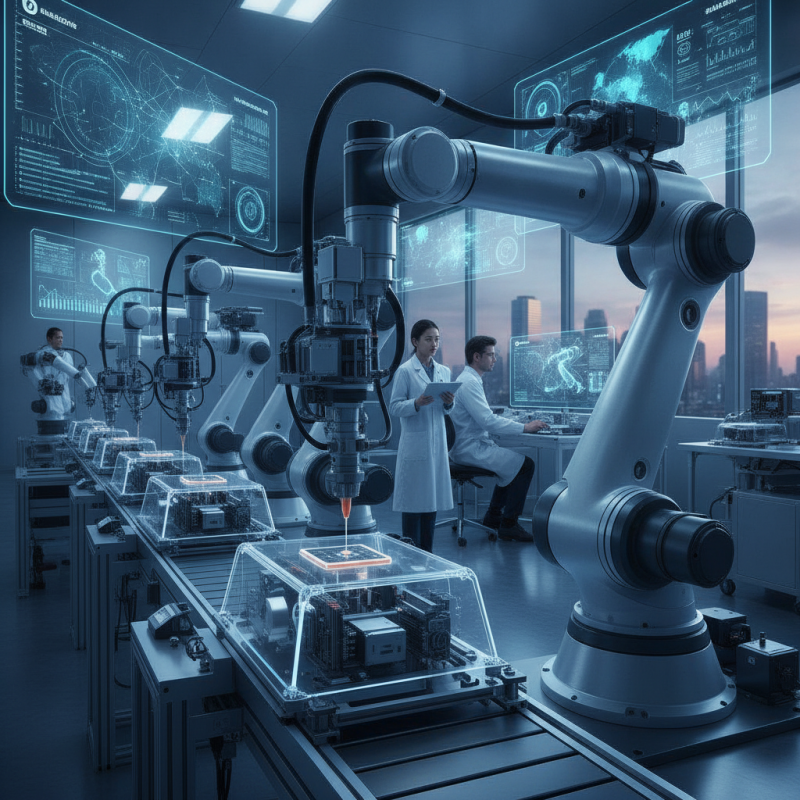
Robotic sealing systems face various challenges affecting control accuracy. One key issue is the variability in environmental conditions. Temperature fluctuations or humidity changes can impact the sealing material's properties and adhesion. This variability makes it difficult to achieve consistent sealing results.
Sensor integration presents another challenge. Many robotic systems rely on a limited range of sensors, leading to a lack of feedback for adjustments. This limitation can result in poor sealing quality. It might also cause machine wear over time, reducing overall efficiency.
Furthermore, programming complexities add another layer of difficulty. Developers often struggle with creating algorithms that adapt to changing conditions. This rigidity can hinder the system’s ability to self-correct, resulting in higher rejection rates. Reducing these challenges requires continuous testing and refinement. Addressing control accuracy is essential for enhancing overall system performance.
Technological innovations are crucial for enhancing control accuracy in robotic sealing systems. High-precision sensors play a key role here. According to a 2022 industry report, systems utilizing advanced sensors can achieve a 30% increase in sealing accuracy. These sensors monitor pressure, temperature, and position in real-time. They offer immediate feedback, enabling adjustments during operation. The result is a significant reduction in seal defects.
Machine learning algorithms are another innovation transforming the industry. By analyzing data from various sealing processes, these algorithms can predict and rectify potential errors. A study indicated that using machine learning improved defect detection rates by over 25%. Such technology also adapts to changing conditions, ensuring optimal performance. However, implementing these systems can be complex, leading to the need for specialized training.
Despite these advances, some challenges persist. Not all robotic sealing systems can integrate new technology seamlessly. Connectivity issues often arise with legacy equipment. Additionally, inaccurate data inputs can lead to flawed analyses. Continuous evaluation of these technological tools is essential for lasting improvements in control accuracy. Industry stakeholders must remain vigilant in addressing these limitations for future growth.
In the realm of robotic sealing systems, enhancing control accuracy is pivotal. This improvement largely relies on optimizing sensors and feedback mechanisms. Advanced sensors provide essential data that helps calibrate the sealing process, ensuring tight seals and minimizing leaks. These sensors detect variations in pressure, temperature, and material properties, enabling precise adjustments.
Tips: Regularly calibrate sensors to maintain accuracy. This will help in adapting to different materials and operational conditions.
Feedback mechanisms play a crucial role. They facilitate real-time adjustments by relaying data back to the control unit. Implementing closed-loop systems enhances responsiveness and stability. These systems continuously monitor performance, making necessary corrections on-the-fly. However, there may be delays in response time that can affect overall performance.
Tips: Analyze feedback data consistently. This helps identify patterns and areas for improvement.
Lastly, the integration of machine learning algorithms can further refine control strategies. Learning from historical data allows systems to predict discrepancies before they arise. While this approach shows promise, it requires rigorous testing to ensure reliability. Continuous assessment and iteration are vital for success in developing these sophisticated systems.
The integration of data analytics and machine learning in robotic sealing systems is transforming industry practices. These technologies enhance control accuracy significantly. For instance, machine learning algorithms can analyze sensor data in real-time. This allows the system to adapt to variable conditions like temperature and humidity.
Data analytics further refines operational efficiency. By evaluating historical performance data, manufacturers can pinpoint inefficiencies. For example, identifying patterns can lead to adjustments that minimize errors during the sealing process. This combination of predictive analytics and adaptive controls can create a more reliable sealing system. However, achieving this requires ongoing assessment and iterative improvements.
Despite the advantages, there are challenges. Data quality must be consistently high. Poor quality data can lead to misleading insights. Also, systems should be flexible enough to incorporate new learning. This ensures they remain effective as conditions change. Continuous feedback loops are necessary to enhance accuracy and reliability. Embracing this approach can significantly boost the overall performance of robotic sealing systems.
| Method | Description | Data Analytics Technique | Machine Learning Algorithm | Accuracy Improvement (%) |
|---|---|---|---|---|
| Sensor Calibration | Regular calibration of sensors used in sealing robots for precision | Descriptive Statistics | Regression Analysis | 10 |
| Real-time Monitoring | Implementing real-time data monitoring to detect anomalies | Time Series Analysis | Support Vector Machines | 15 |
| Predictive Maintenance | Using predictive analytics to prevent equipment failures | Predictive Modeling | Random Forest | 20 |
| Feedback Control Loop Optimization | Optimizing feedback loops for enhanced control responsiveness | Control Chart Analysis | Neural Networks | 25 |
| Adapting Control Strategies | Using adaptive control strategies to manage varying conditions | Simulation Analysis | K-Nearest Neighbors | 30 |
Calibrating and maintaining robotic sealing systems is crucial for achieving high accuracy. According to a recent industry report, improper calibration can lead to a 15% decline in productivity. Regular checks on sensors and actuators can help avoid these setbacks. Focusing on component alignment is also key. Even minor misalignments can cause leaks, resulting in costly material waste.
Routine maintenance is as important as initial calibration. Studies show that up to 30% of robotic failures stem from neglected maintenance. Scheduled inspections can identify wear and tear early, preventing unexpected breakdowns. Operators should pay attention to lubricant levels and replace worn parts promptly.
Training technicians in best practices is another effective measure. Knowledge gaps can lead to errors in setup and maintenance. Ensuring team members understand the systems enhances reliability. The industry average indicates that well-trained teams can improve overall system performance by up to 20%. Ensuring these practices can pave the way for greater control accuracy in sealing systems.
: Control accuracy is vital to ensure tight seals and minimize leaks.
Advanced sensors detect pressure, temperature, and material changes, enabling precise adjustments.
Regular calibration is essential to adapt to different materials and operational conditions.
Feedback mechanisms allow real-time adjustments, relaying data back to the control unit.
A closed-loop system continuously monitors performance, making real-time corrections to improve stability.
Analyzing feedback data helps identify patterns and areas needing improvement.
Machine learning analyzes sensor data in real time, predicting discrepancies and improving adaptability.
Maintaining high data quality is crucial; poor data can lead to misleading insights.
Ongoing assessment helps systems adapt and remain effective as conditions change.
While promising, predictive analytics requires rigorous testing to ensure reliability.
In the quest to enhance control accuracy of robotic sealing systems, addressing current challenges is paramount. These challenges often stem from limitations in existing technologies, which hinder precision during operations. Technological innovations play a crucial role in overcoming these hurdles, as advancements in sensor technology and feedback mechanisms allow for more responsive and accurate control.
Furthermore, the integration of data analytics and machine learning into robotic control systems represents a significant leap forward. By analyzing operational data, these systems can learn and adapt to various sealing conditions, optimizing performance. Lastly, best practices for calibration and maintenance are essential to ensure that sealing robots operate at their highest accuracy levels, thereby enhancing overall efficiency and reliability in industrial applications.

Yabo CNC