How to Control Quality in China Glass Bottle Production?

Time:2026-09-18 Author:Sophia
0%

Quality control in China glass bottle production requires more than checking finished cartons. It begins with verified raw materials, controlled furnace temperatures, and stable forming conditions. Sand, soda ash, limestone, and recycled glass must meet approved specifications. Small changes in moisture or chemical balance can affect bottle color and strength. Experienced inspectors understand these variations because they appear during real production, not only in reports.

A reliable program should explain How to ensure quality control in mass glass bottle production. Inspectors can review mold condition, gob weight, wall thickness, and thermal shock resistance. Automatic cameras may detect cracks, black spots, bubbles, and deformed finishes. However, technology cannot replace practical judgment. A sample bottle should be measured with calipers, tested for pressure, and checked against approved drawings. Production records should identify each batch, shift, machine, and inspection result. Traceability matters.

The process still deserves honest reflection. No factory is perfect. A passed inspection does not guarantee every bottle is flawless. Sampling plans can miss rare defects, especially during mold changes or machine adjustments. Supplier audits, third-party testing, and corrective action reports can reduce this risk. Yet these controls require follow-through from both the factory and buyer. Clear specifications, retained samples, and regular communication prevent assumptions from becoming expensive failures. Quality is built beside the furnace, checked on the production line, and proven through consistent evidence.
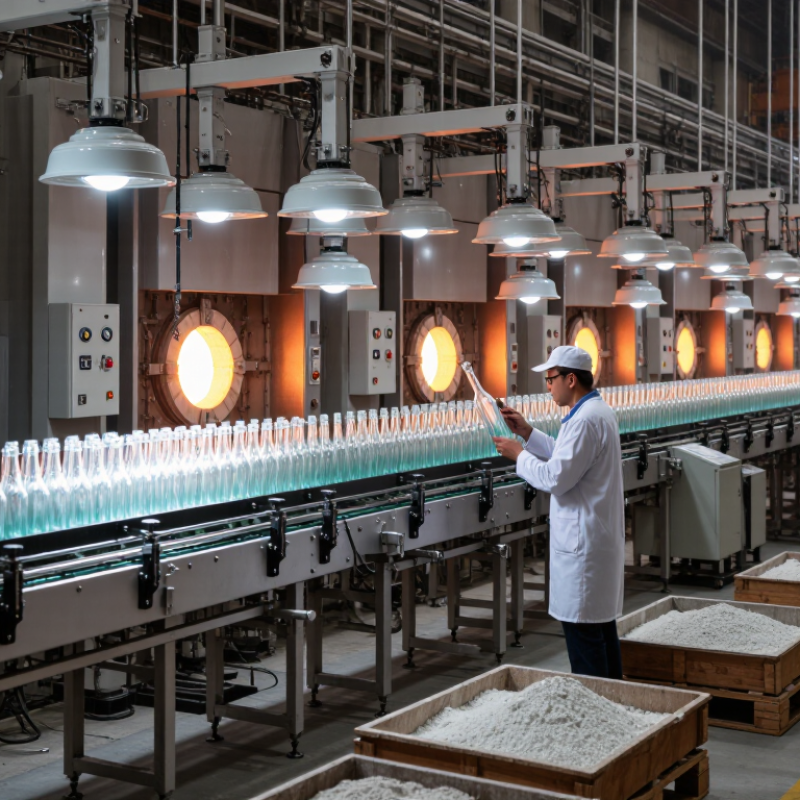
How to Control Quality in China Glass Bottle Production?

Define Quality Standards for Glass Bottle Production in China

Quality control in China glass bottle production starts with a written standard, not a verbal promise. Define the bottle’s capacity, weight, height, neck finish, diameter, and allowable tolerances. Include glass color, transparency, surface feel, and acceptable cosmetic limits. Use drawings with clear measurement points. A sample alone is insufficient. Keep an approved reference bottle for production checks, but review it regularly because storage can change its appearance.

Quality standards should also describe functional testing.

Set inspection rules for cracks, stones, bubbles, seams, scratches, and uneven walls. Specify sampling levels for each production batch. Test dimensional accuracy with calibrated gauges, then check leakage, vertical load, thermal shock, and closure fit where relevant. Record furnace conditions, mold numbers, inspection results, and rejected quantities. This traceability helps identify whether a defect began with raw material, forming, cooling, or packing.

Small details matter. Cartons should protect bottle mouths from impact. Pallets should remain dry and stable. Quality staff need photographs showing acceptable and unacceptable defects. A practical standard is never flawless. Some limits may be too strict for efficient production, while others may miss defects visible under retail lighting. Review the results with the factory, adjust unclear criteria, and keep every revision dated. Clear records build trust between technical teams and reduce arguments during shipment inspection.

Select Qualified Suppliers and Verify Factory Capabilities

Quality control in Chinese glass bottle production starts before the first furnace inspection. Supplier selection should combine verified records, process evidence, and technical conversations. The ISO Survey 2022 recorded more than one million ISO 9001 certificates worldwide. Yet certification alone proves little about a specific bottle line. Ask for the certificate scope, expiry date, audit body, and recent corrective-action records. Do not accept a certificate copied into a sales presentation.

Factory capability must be tested on the floor. Check batch traceability from sand, recycled glass, and additives to packed pallets. Watch furnace temperature controls, gob formation, mold changes, annealing, and inspection speed. Request production records for weight, dimensions, thermal shock, pressure, and impact tests. Use ISO 2859-1 sampling plans, but agree acceptance limits before production starts. Visit during live production, not only an arranged showroom run. Photographs are useful evidence, not test results.

For food-contact bottles, review migration testing and declarations against the destination market’s rules. Glass Packaging Institute technical data reports that each 10% increase in recycled glass can reduce furnace energy use by roughly 2% to 3%. However, excessive or poorly sorted recycled glass may create stones, color variation, and inclusions. That trade-off deserves a trial batch. A good supplier welcomes failure analysis. One weakness remains: audits can miss night-shift discipline. Include unannounced checks or second-party verification where risk justifies the cost.

Control Raw Materials and Monitor the Glass Melting Process

Quality control in China glass bottle production starts before the furnace. Suppliers should test silica sand, soda ash, limestone, and cullet for chemical purity, moisture, and particle size. Each delivery needs a documented certificate of analysis and random laboratory verification. Small variations can create bubbles, stones, color shifts, or weak bottle walls.

Glass melts at roughly 1,500°C, so stable furnace control is essential. Operators should record temperature by zone, glass level, pressure, redox condition, and residence time. Infrared cameras and automatic inspection systems can detect checks, blisters, stones, and dimensional defects. The Glass Packaging Institute reports that every 10% increase in cullet can reduce melting energy by about 2–3%. However, contaminated cullet can damage quality quickly. Lower energy is not automatically better production.

Batch moisture deserves attention. It changes feeding behavior and may increase furnace instability. Bottle weight, neck finish, wall thickness, and thermal shock resistance should be checked during every production shift. ISO 9001-based traceability helps connect defects with raw-material lots and furnace settings. In practice, records are sometimes complete but not useful. A spreadsheet cannot explain a sudden crack without accurate sampling, calibrated instruments, and experienced technicians standing near the line.

Inspect Forming, Annealing, and Surface Finishing Stages

How to Control Quality in China Glass Bottle Production?

Forming inspection begins while bottles leave the mould, not after packing. Check the neck finish, base, seams, and shoulder for distortion. A trained inspector should compare dimensions with approved drawings and use calibrated gauges. Watch for thin walls, blisters, stones, and uneven glass distribution. These defects may appear minor, but they can weaken bottles during filling or transport. Inspectors should also review mould temperature, gob weight, and forming pressure records.

Annealing requires close attention to the lehr temperature profile and conveyor speed. Internal stress is invisible, so visual inspection alone is not enough. A polariscopic check can reveal stress patterns around the neck, heel, and base. Samples should be tested at defined intervals, especially after production changes. In practice, rushed sampling creates risk. One missed adjustment can affect thousands of bottles. Records must show the time, machine, operator, and corrective action.

Surface finishing includes coating coverage, smoothness, cleanliness, and resistance to scuffing. Check coated and uncoated areas under consistent lighting. Rub tests and adhesion checks can expose weak finishing before shipment. Pay special attention to contact points, such as the shoulder and lower body. A bottle may look attractive yet fail during handling. That is easy to overlook. Quality teams should review rejected samples honestly and trace repeated defects back to forming, annealing, or finishing conditions.

How to Control Quality in China Glass Bottle Production?

Inspection focus across forming, annealing, and surface finishing stages

The chart presents a practical reference view of accepted bottles per 10,000 inspected units. Forming control focuses on dimensions and wall-thickness consistency, annealing control verifies residual-stress relief, and surface-finishing control checks scratches, coating quality, and visual defects. Actual targets should be aligned with the customer specification and plant inspection records.

Perform Final Testing, Documentation, and Continuous Improvement

How to Control Quality in China Glass Bottle Production?

Final testing should confirm more than appearance. Inspectors should check bottle dimensions, wall thickness, weight, capacity, color, and closure fit. Pressure and thermal shock tests reveal weaknesses that visual checks may miss. Drop testing also matters when bottles face repeated handling during transport. Sampling plans must be defined before production begins. Otherwise, inspection decisions may become inconsistent.

Documentation makes quality decisions traceable. Record batch numbers, furnace details, inspection times, test equipment, and operator names. Keep calibrated equipment certificates with every relevant report. Clear photos can support findings, especially for scratches, bubbles, cracks, or uneven finishes. In practical factory audits, a clean report can still hide poor sampling. That is a point worth reviewing. Digital records are useful, but missing entries still weaken reliability.

Tips: Set acceptance limits in writing. Retest unusual results. Separate failed samples from approved stock. Review recurring defects every month. Small defects often show a process problem. Continuous improvement should connect final results with production changes. Engineers can adjust forming temperatures, mold alignment, cooling speed, or handling methods. Track whether the correction actually works. Sometimes, a quick fix reduces one defect but creates another. That result should be documented, not ignored. Supplier and buyer teams should review evidence together before changing specifications.

FAQS

What should a written glass bottle quality standard include?

Define capacity, weight, height, neck finish, diameter, and permitted tolerances. Use technical drawings with clear measurement points. Include glass color, transparency, surface feel, and cosmetic limits. A sample alone is not enough.

How should raw materials be checked before melting?

Test sand, soda ash, limestone, and recycled glass for purity, moisture, and particle size. Keep a certificate for every delivery. Verify selected batches in a laboratory. Small changes can cause bubbles, stones, color shifts, or weak walls.

Which furnace conditions need regular monitoring?

Record temperature by furnace zone, glass level, pressure, redox condition, and residence time. Check batch moisture because it can disturb feeding. Recycled glass may reduce energy use, but contamination can quickly damage quality. Lower energy is not automatically better.

What defects should inspectors find during bottle forming?

Inspect bottles as they leave the mould. Check the neck, base, seams, shoulder, wall thickness, and glass distribution. Use calibrated gauges against approved drawings. Also record mould temperature, gob weight, and forming pressure.

Why is annealing testing important?

Annealing removes internal stress that visual inspection cannot reliably detect. Check the cooling profile and conveyor speed. Use polarized-light inspection around the neck, heel, and base. One missed adjustment can affect thousands of bottles.

How can surface finishing quality be evaluated?

Check coating coverage, smoothness, cleanliness, and scuff resistance under consistent lighting. Use rub and adhesion tests before shipment. Inspect contact areas, especially the shoulder and lower body. A bottle can look attractive yet fail during handling.

What functional tests should each production batch include?

Test dimensions with calibrated equipment. Where relevant, check leakage, vertical load, thermal shock, and closure fit. Set sampling levels for each batch. Testing only a few attractive bottles may hide production problems.

How can factories improve traceability and shipment decisions?

Record raw-material lots, furnace settings, mould numbers, inspection times, operators, and rejected quantities. Keep dated revisions of every quality requirement. Dry, stable pallets and protective cartons reduce impact around bottle mouths. Records may look complete but still explain very little.

How often should glass bottle standards be reviewed?

Review standards after repeated defects, production changes, or shipment disputes. Compare rejected samples with retail lighting and real handling conditions. Some limits may be too strict for efficient production. Others may miss defects. No standard is perfect.

Conclusion

How to ensure quality control in mass glass bottle production begins with clear, measurable standards for dimensions, weight, capacity, color, strength, sealing performance, and visual appearance. Manufacturers should select qualified suppliers, review their production equipment and quality systems, and verify factory capabilities through audits and sample evaluations. Consistent raw material inspection is also essential, including checks on cullet, sand, additives, and contamination risks. During glass melting, temperature, composition, and furnace conditions must be carefully monitored to maintain stable quality.

Quality control should continue through forming, annealing, and surface finishing. Inspectors need to check bottle shape, wall thickness, stress levels, cracks, scratches, coating uniformity, and other defects at each stage. Before shipment, finished bottles should undergo dimensional checks, pressure or impact testing, thermal shock testing, and closure compatibility tests when required. Complete inspection records, traceable batch documentation, and regular root-cause analysis help identify problems quickly. By combining reliable suppliers, controlled processes, thorough testing, and continuous improvement, producers can achieve consistent, safe, and cost-effective glass bottle production in China.

Sophia

Sophia

Sophia is a dedicated marketing professional with an exceptional depth of knowledge about her company's products and services. With a keen understanding of market trends and customer needs, she crafts insightful blog posts that not only inform but also engage readers, enriching the company’s online......