What Is the Role of Glass Handling Robots in Production?

Time:2026-09-13 Author:Sophia
0%

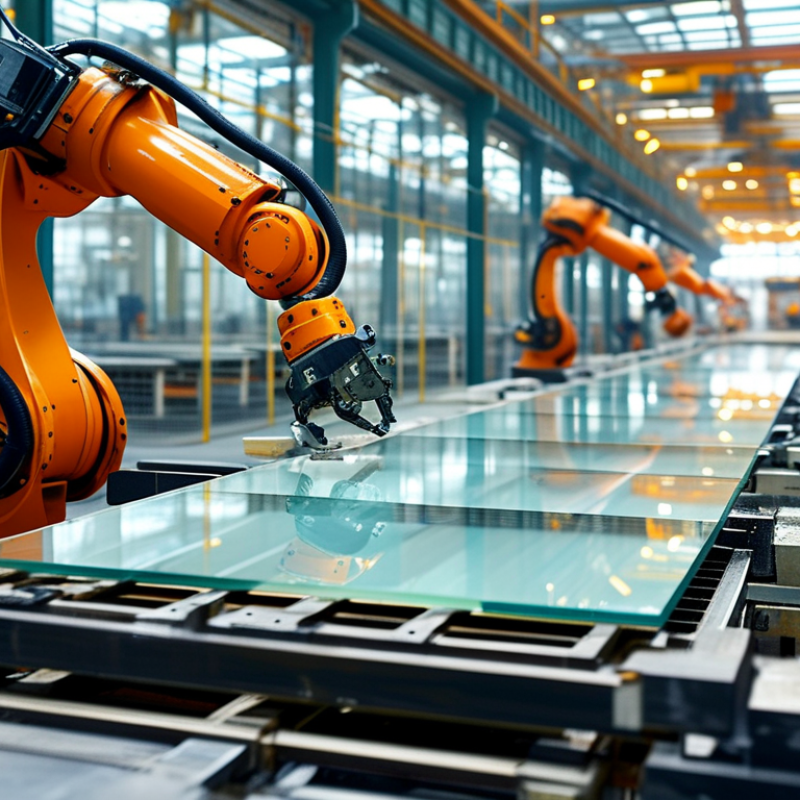
Glass production combines heat, sharp edges, reflective surfaces, and demanding cycle times. In this environment, the question “What is the role of glass handling robots in production lines” has a practical answer: they move, position, load, unload, and inspect glass with controlled repeatability. Robots can transfer sheets between cutting tables, washing units, furnaces, and stacking stations. Their vacuum grippers also reduce direct contact with fragile surfaces.

The International Federation of Robotics reported 541,302 industrial robots installed worldwide in 2023, showing how automation is becoming standard across manufacturing. Its World Robotics 2024 report also identifies automotive, electronics, and metal industries as major adopters. Glass manufacturers increasingly apply similar principles. A robot can lift a 2.5-metre panel, rotate it precisely, and place it onto a conveyor without dragging the edge. That small movement can prevent costly scratches.

Automation also supports safer work. The U.S. Bureau of Labor Statistics continues to identify material handling as a significant source of workplace injuries. Removing repetitive lifting from hot or confined areas can reduce exposure. However, robots are not a magic shield. A poorly tuned vacuum cup may mark coated glass, while an inaccurate vision system may misread reflections. Human technicians still need to check tooling, sensors, software, and emergency procedures.

Reports from the International Energy Agency show that industrial efficiency depends on equipment performance, maintenance, and process control. This matters because a robot’s value is not measured only by speed. It also depends on fewer breakages, stable quality, traceable data, and dependable uptime. The result can be impressive. The investment still requires careful testing, operator training, and honest evaluation of each production line.
What Is the Role of Glass Handling Robots in Production?

What Are Glass Handling Robots?

Glass handling robots are automated machines designed to lift, move, position, and release glass safely. They combine a robotic arm with suction cups, mechanical grippers, or both. Sensors check panel position, surface contact, and unexpected movement. In a factory, the robot may take a sheet from a rack, rotate it, and place it onto a processing table.

The task looks simple. It is not.

Their value comes from controlled repetition, not speed alone. A properly configured system can reduce hand injuries, edge damage, and alignment errors during cutting, washing, tempering, or assembly. Vacuum circuits must match glass weight, texture, and surface cleanliness. If a cup loses pressure, the controller should stop movement and hold the load securely. Light curtains, force monitoring, and emergency stops add another safety layer. Still, installation needs careful testing. Dust, coatings, moisture, and unusual shapes can weaken the expected grip.

Operators usually set pickup points, travel paths, and release positions through a control interface. They also inspect cups, hoses, sensors, and frame connections before production begins. A damaged seal can create a small leak that becomes a serious handling problem. Robots do not understand every fragile condition. They can misread a warped sheet or a poorly stacked load. That assumption fails. Human judgment remains necessary when glass varies beyond programmed limits. In practice, reliable performance depends on matching robot capacity to real panel sizes, cycle times, and workplace conditions.

How Do Glass Handling Robots Work?

Glass handling robots move fragile panels through production with controlled speed and measured force. Their work begins with sensors that locate each sheet and check its position. Vision systems detect edges, surface marks, and unexpected gaps. Some installations also use laser distance sensors.

A control unit compares this information with the planned movement. It then guides robotic joints along a programmed path. Vacuum grippers create suction across the glass surface. Pressure sensors confirm whether the sheet is held securely. If suction drops, the robot can pause before lifting. That small delay may prevent a costly break.

The robot accelerates gradually, especially when carrying large panels. It rotates the glass to match cutting, washing, coating, or storage equipment. Soft contact materials help reduce scratches. Safety scanners monitor nearby workers and restrict movement when someone enters the operating zone. Technicians still need to adjust gripping pressure for different thicknesses and surface finishes. Thin glass can flex unexpectedly. Calibration can also drift after long shifts, so regular testing remains essential. No automated system is flawless. Humidity, dust, and a slightly misaligned panel can affect performance. Careful operators review these details rather than trusting every sensor reading.

What Is the Role of Glass Handling Robots in Production?

Glass handling robots use vacuum grippers and motion control to lift, position, transfer, and stack glass safely and consistently. The chart shows the mass of a 1 m² glass panel at different thicknesses, calculated using the standard glass density of approximately 2,500 kg/m³.

As thickness increases, the load rises proportionally. This is why robot payload capacity, vacuum-gripper design, acceleration limits, and precise motion control are important in automated glass production.

Which Production Tasks Do They Perform?

Glass handling robots perform more than simple lifting. They move large panes between cutting, edging, washing, and tempering stations. Their vacuum grippers hold sheets flat, reducing contact with sharp edges and polished surfaces. On automated lines, robots load cutting tables, transfer finished panels, and place glass into vertical racks. They also feed inspection stations, where cameras check scratches, chips, dimensions, and coating defects.

The International Federation of Robotics reported 541,302 industrial robots installed worldwide in 2023. That scale shows why repeatable material handling matters. In production, robots can palletize finished glass, separate different sizes, and prepare orders for shipping. Their motion control also supports consistent stacking pressure, which helps prevent corner damage. Small details matter.

Robots do not remove every production risk. A misplaced suction cup can cause a dropped panel, while poor programming may create collisions near frames or conveyors. Operators still verify vacuum pressure, gripper wear, sensor readings, and emergency stops. The U.S. Occupational Safety and Health Administration emphasizes guarding and effective lockout procedures around automated machinery. These requirements remain practical, not decorative. In my view, the weakest installations often automate movement before studying workflow. That can preserve inefficiency at a faster speed.

What Benefits Do They Provide to Manufacturers?

What Is the Role of Glass Handling Robots in Production?

Glass handling robots support safer, faster, and more consistent movement across production lines. They lift sheets, rotate panels, and place finished units with controlled pressure. This reduces manual exposure to sharp edges, heavy loads, and sudden breakage.

The International Federation of Robotics reported 541,302 industrial robots installed worldwide in 2023. That figure shows how automation is becoming normal in manufacturing, not experimental.

The clearest benefit is operational consistency. A robot can repeat the same gripping path thousands of times, even during long shifts. This helps reduce scratches, misalignment, and handling-related waste. Sensors can also record suction pressure, panel position, and cycle time. These records support traceability and faster maintenance decisions.

The World Robotics 2024 report recorded a global manufacturing robot density of 162 units per 10,000 employees in 2023. Glass processors can use this trend to improve output without simply adding more labor hours.

However, installation is not automatically profitable. A poorly designed end-effector may leave marks or release a panel unexpectedly. Workers still need practical training, inspection routines, and emergency procedures. Integration can also interrupt production before improvements appear.

In my experience, the best results come from testing one handling stage first, measuring breakage and cycle time, then expanding carefully. Automation removes some risks, but it does not remove responsibility.

What Safety and Maintenance Factors Matter?

Glass handling robots reduce manual lifting, sudden twisting, and exposure to sharp edges. Their value becomes clearer near cutting tables, racks, and furnace loading points. The International Federation of Robotics reported 541,302 industrial robot installations worldwide in 2023. More robots also mean more safety responsibilities.

Safety begins with a documented risk assessment, not a faster cycle time. ISO 12100 supports hazard identification, while ISO 10218 addresses industrial robot safety. Guards, interlocked gates, light curtains, and clearly tested emergency stops should protect every access route. Vacuum loss needs special attention. A falling glass sheet can become a silent, heavy hazard. Sensors should detect pressure changes, damaged suction cups, and uneven loads. Operators need practical training, including recovery after a failed grip. Short drills help.

Maintenance is equally important. The UK Health and Safety Executive notes that maintenance work is linked to about 25% of fatal workplace incidents. Inspect suction pads, hoses, cables, grippers, and axis brakes at defined intervals. Keep glass dust away from sensors and guide rails. Lockout procedures must isolate electrical, pneumatic, and stored mechanical energy before servicing. Maintenance records should show inspection dates, faults, replaced parts, and corrective actions. In practice, schedules are sometimes too optimistic. A cracked suction pad may pass a morning check, then fail after repeated heat exposure. Condition monitoring helps, but it does not replace experienced judgment.

What Is the Role of Glass Handling Robots in Production? - What Safety and Maintenance Factors Matter?

Production Dimension Role of the Robot Main Safety Factor Maintenance Requirement Useful Control or Indicator Operational Priority
Glass Loading and Unloading Transfers sheets, panels, or finished parts between racks, conveyors, processing machines, and inspection stations while reducing manual lifting. Verify that the robot payload, reach, acceleration, and gripper capacity are suitable for the actual glass size, mass, and center of gravity. Inspect the gripper frame, mounting points, fasteners, and cables before each shift; repair deformation or looseness before operation. Payload limit, load-center specification, transfer success rate, and abnormal-motion alarms. High
Vacuum Gripping Uses vacuum cups or similar gripping devices to hold glass securely during horizontal and vertical movement. Use vacuum monitoring, suitable cup materials, adequate cup coverage, and an automatic stop or safe response after loss of vacuum. Check cups for cuts, hardening, contamination, and loss of elasticity; inspect hoses, filters, valves, and vacuum generators. Vacuum level, vacuum decay, low-pressure alarm, and confirmed grip signal before motion. High
Breakage and Sharp-Edge Control Maintains consistent handling paths and reduces impacts, twisting, and uncontrolled contact that can cause cracks or breakage. Provide guarding, exclusion zones, impact-resistant protection, and procedures for safely removing broken or chipped glass. Inspect protective covers, end-of-arm tooling, sensors, and conveyor contact surfaces for chips, fragments, or wear. Breakage rate, impact events, collision alarms, and glass-fragment inspection records. High
Robot Cell Safety Operates within a defined automated cell to separate routine material movement from personnel access. Use risk-assessed safeguarding such as interlocked gates, presence-sensing devices, emergency stops, safe speed functions, and clearly marked restricted areas. Test emergency stops, gate interlocks, light curtains, scanners, and safety circuits at the intervals required by the site risk assessment. Safety-device test results, access-door status, emergency-stop response, and fault-reset records. High
Operator Interaction Supports loading, setup, inspection, and recovery tasks while allowing operators to control the process without entering an active hazard zone. Provide documented lockout/tagout procedures, operator training, clear control-panel messages, and controlled manual or teach modes. Review training records, control-panel condition, pendant cables, buttons, and mode-selector functions. Training completion, near-miss reports, unauthorized access events, and recovery-time records. High
Positioning Accuracy Places glass consistently for cutting, edging, coating, tempering, assembly, or inspection operations. Prevent misalignment that could cause glass collision, unstable stacking, machine interference, or unexpected load movement. Check calibration, encoder feedback, gripper alignment, guide rails, and reference points according to the preventive-maintenance plan. Placement deviation, repeatability checks, alignment faults, and rejected-part percentage. Medium
Preventive Maintenance Maintains reliable handling performance and reduces unplanned stoppages caused by wear, contamination, or component failure. Maintenance must be performed in a de-energized and secured state, with the robot and stored energy isolated before access. Follow the equipment risk assessment and manufacturer instructions for lubrication, filter replacement, fastener checks, cable inspection, and functional tests. Planned-maintenance completion, downtime hours, recurring alarms, and mean time between failures. Medium
Environmental Conditions Operates in areas that may contain glass dust, moisture, heat, oil, or cleaning chemicals, depending on the process. Confirm that the robot, sensors, cables, gripper materials, and electrical enclosure are suitable for the actual temperature, humidity, dust, and chemical exposure. Clean sensors and camera lenses, remove glass particles, inspect seals, and check for corrosion or contamination. Temperature and humidity records, sensor-fault frequency, contamination findings, and enclosure condition. Medium
Performance and Quality Improves repeatability, handling speed, labor ergonomics, and production consistency when the cell is correctly integrated. Production speed must not exceed the safe operating limits of the robot, gripper, glass product, conveyor, or surrounding equipment. Trend cycle time, stoppages, breakage, vacuum faults, and quality rejects to identify deterioration before a serious failure occurs. Cycle time, availability, first-pass yield, breakage rate, and unplanned downtime. Low to Medium
Standards and Documentation Provides a structured basis for designing, validating, operating, and maintaining the complete robotic handling system. Apply relevant machinery, industrial robot, functional-safety, electrical, and workplace-safety requirements based on the installation location and risk assessment. Keep current risk assessments, electrical drawings, inspection records, software backups, maintenance logs, and operating procedures. Document revision status, audit findings, corrective-action closure, and safety-validation records. High

FAQS

How do glass handling robots locate each panel?

Sensors identify the sheet’s position and edges. Vision systems can notice surface marks and unexpected gaps. Laser distance sensors may add measurement detail.

How does a robot hold fragile glass securely?

Vacuum grippers create suction across the glass surface. Pressure sensors check the grip before lifting. If suction falls, the robot pauses.

Why does the robot move slowly at the beginning?

Gradual acceleration reduces sudden force on large panels. The robot can rotate glass toward cutting, washing, coating, or storage equipment. Large sheets need patience.

Can glass handling robots prevent every break?

No automated system is flawless. Humidity, dust, thin glass, and misaligned panels can affect performance. Careful operators should question unusual sensor readings.

What safety equipment should protect a robot work area?

Guards, interlocked gates, light curtains, and tested emergency stops should cover access routes. Safety scanners can restrict movement near workers. A clear boundary matters.

What happens when vacuum pressure drops during lifting?

The robot should pause or stop before raising the panel further. Sensors may detect damaged suction cups or uneven loads. A falling sheet is a serious hazard.

What maintenance checks are important?

Inspect suction pads, hoses, cables, grippers, and axis brakes regularly. Remove glass dust from sensors and guide rails. Small cracks can become failures.

How should technicians prepare for maintenance work?

They should isolate electrical, pneumatic, and stored mechanical energy before servicing. Records should list dates, faults, replaced parts, and corrective actions. Short recovery drills help.

Why is calibration and human judgment still necessary?

Calibration can drift after long shifts. Technicians may need different gripping pressure for varying thicknesses and surface finishes. Sensors help, but judgment remains necessary.

Conclusion

Glass handling robots are automated systems designed to move, position, load, unload, and inspect glass products with precision and consistency. They typically use robotic arms, vacuum gripping tools, sensors, and programmed controls to safely handle panels, sheets, containers, or finished components. Their movements can be coordinated with conveyors and other production equipment, allowing them to complete repetitive tasks while reducing manual lifting and positioning.

What is the role of glass handling robots in production lines? Their main role is to improve efficiency, product protection, and workplace safety. They can transfer glass between processing stations, stack or sort products, support cutting and assembly operations, and maintain accurate placement throughout production. Manufacturers also benefit from faster cycle times, reduced material damage, consistent quality, and lower physical strain on workers. To operate reliably, these systems require suitable grippers, regular inspections, software checks, sensor calibration, and preventive maintenance. Clear safety zones, operator training, and emergency procedures are also essential for safe and dependable operation.

Sophia

Sophia

Sophia is a dedicated marketing professional with an exceptional depth of knowledge about her company's products and services. With a keen understanding of market trends and customer needs, she crafts insightful blog posts that not only inform but also engage readers, enriching the company’s online......