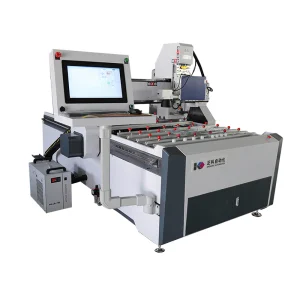
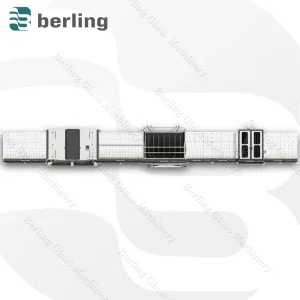
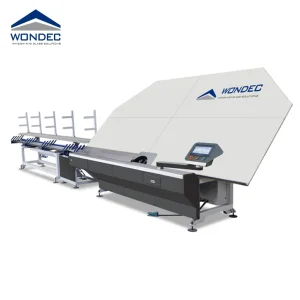
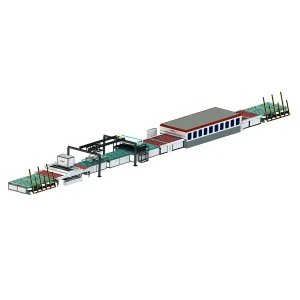
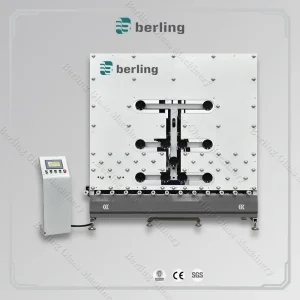
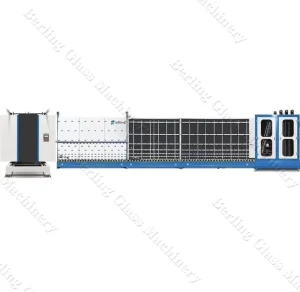
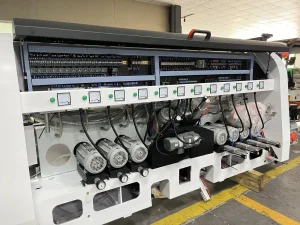
Explore our cutting-edge machinery designed for insulating glass production, high-speed cleaning, and advanced glass edging.
Years in Industrial Machinery R&D
National Hardware & Software Patents
Countries Exported Worldwide
Reliable Global Technical Support
Magnetron sputtering vacuum deposition (MSVD) has revolutionized the architectural and automotive glass sectors. A sputtering glass coating machine utilizes high-vacuum conditions to deposit atomized layers of metals, metallic oxides, or nitrides onto glass substrates. These nanometer-thin films fundamentally alter the optical and thermal performance of the glass, creating critical products like Low-Emissivity (Low-E) glass, anti-reflective displays, and solar-control panels.
Modern sustainability frameworks require buildings to reduce energy footprints significantly. Low-E coatings selectively reflect infrared radiation while allowing visible light to pass through, reducing cooling loads in summer and retaining heat during winter. This technology is critical for green construction, making high-precision sputtering equipment a vital asset for forward-thinking glass processors.
"Precision magnetron sputtering is the backbone of high-performance glass. Controlled coating morphology ensures optimal U-value and solar heat gain coefficient (SHGC) ratings."
An inside look at how Chinese manufacturers have combined high-precision engineering with unmatched industrial integration.
Chinese factories are situated in robust industrial clusters. From raw structural steel fabrication to vacuum chamber machining and precision target assembly, the entire supply chain is localized. This minimizes transport times and dramatically reduces capital expenditure for the buyer.
Top-tier Chinese manufacturers implement advanced control systems, incorporating Siemens or Beckhoff PLCs, real-time closed-loop thickness monitoring, and SCADA database systems. This ensures precision deposition that rivals traditional European brands at a competitive cost structure.
Unlike rigid European suppliers, Chinese manufacturers excel in engineering customized solutions. Whether accommodating space constraints, adjusting cycle speeds, or integrating specialized cathode targets (planar vs. cylindrical), plants adapt to match precise client needs.
The role of structural glass has expanded. It is no longer just a physical barrier; it now serves as an active thermal regulator. High-output sputtering lines must integrate seamlessly with pre-treatment steps, including high-speed vertical glass washing machines, and downstream processing like IGU (Insulating Glass Unit) assembly lines.
Our solutions target these complex configurations, delivering systems where raw sheet cutting, edge polishing, low-E deposition, tempering, and argon gas filling function as a unified smart factory. This approach minimizes human error, decreases cycle times, and boosts overall yield.
A comprehensive roadmap detailing key evaluation metrics for procurement heads seeking vacuum sputtering systems.
Focus on target geometries, vacuum level baselines (e.g., base pressure of 10-5 Pa), deposition speed per layer, and spectrometer configuration. Ensure compatibility with single, double, and triple-silver coat recipes.
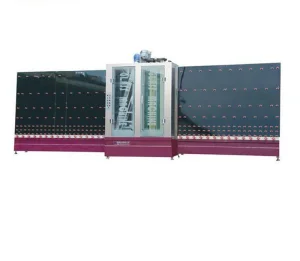
A coater is only as efficient as the glass entering it. Insist on high-efficiency vertical washing machines to guarantee contaminant-free surfaces, preventing film peeling and optical defects.
Due to the complex nature of high-vacuum chambers, prioritize suppliers offering remote PLC diagnostics, structured FAT (Factory Acceptance Testing), and localized spare parts programs.
Shandong Yabo CNC Machinery Co., Ltd is a professional manufacturer of Insulating Glass Machine and lines for already 18 years, and now based on the strong technical support and strong after-sell services, we develop rapidly.
We are focusing on the high quality machines producing and supplying includes the focuses on the design, R&D, manufacture and after-sell service.
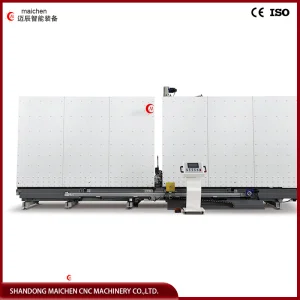
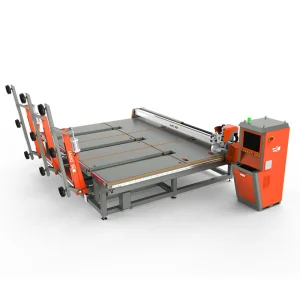
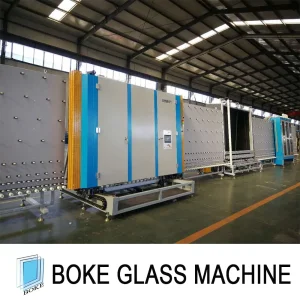
Our key machines is Automatic Insulating Glass Machine, Insulating Glass Line with Argon Gas Filling Function, Automatic Glass Sealing Machine, High Speed Glass Washing Machine, Glass Cutting Machine etc the complete glass deep processing machines. We have already 22 patents for our products, and now still keep in moving.

More than 20 years experienced technical team, unique hardware and software patents, professional after-sales service team

Service Time: 7*24 Hours, 365 Days;
Special Design for Your Special Requirement;
We Use the Latest Equipment and Technology;

Standard Precision Produce;
Orders tracking Report or Videos;
Orders finished Report or Testing Videos.

On-line Service: 7*24 Hours, 365 Days;
Can Come for Installation if necessary;
Can Come for Maintenance if necessary;
Spare Parts Supply for the Whole Machine Life.

Supply Reliable Local Service System
Machine Lifetime Service and Maintenance
Looking for Global Agent Partners
Technical guidance from our R&D engineering division on vacuum levels, target maintenance, and output optimization.
The cycle time varies depending on the number of chambers and structural layers. Typically, for a standard single silver Low-E recipe with barrier and protective layer structures, the line speed reaches 1.5 to 3 meters per minute, depending on the cathode configuration and active vacuum pump down speed.
Any organic contaminants, particulates, or residual minerals on the raw glass surface can disrupt thin-film adhesion, leading to pinholes and coating defects. Sputtering systems require the integration of a multi-stage high-speed vertical glass washing machine using demineralized (DI) water to prepare the substrate surface.
Cylindrical targets continuously rotate, ensuring uniform erosion over the entire surface area. This results in target utilization rates of 80% to 85%, significantly higher than the 30% to 40% typical of planar targets. This rotation prevents target poisoning during reactive sputtering, extends production runs, and lowers raw material costs.
Yes, combining Low-E sputtering coatings with downstream argon gas filling in insulating glass units (IGU) significantly reduces thermal conductivity. Replacing air inside the cavity with inert argon gas lowers the overall U-value, maximizing the energy efficiency of the window assembly.
Explore additional high-precision machines, from vertical washing systems to advanced double-edging furnaces.
 Yabo CNC