Shandong Yabo CNC Machinery Co., Ltd is a highly recognized, professional manufacturer of Insulating Glass Machines and processing lines, maintaining an industry footprint for over 18 years. Enabled by our dynamic, robust technical framework and strong after-sales support systems, our growth trajectory remains fast and focused on global market demands.
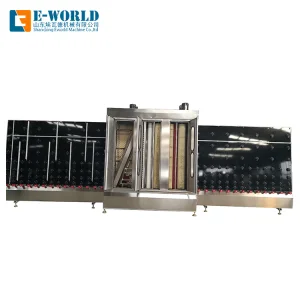
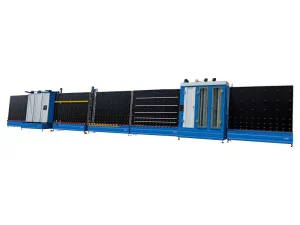
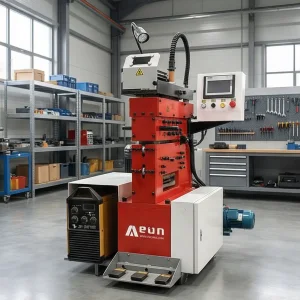
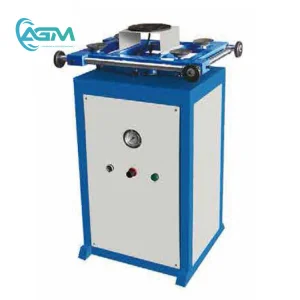
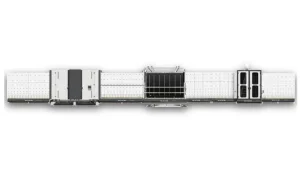
Our focus revolves around fabricating high-tier industrial machinery, ranging from complete design execution, custom R&D, precision manufacturing, and life-cycle after-sales services. Key machinery lines engineered at our production hubs include Automatic Insulating Glass Machines, Insulating Glass Lines with Online Argon Gas Filling Functions, Automatic Glass Sealing Robots, High-Speed Glass Washing Machines, and CNC-controlled Glass Cutting Systems.

The global construction, architectural, and industrial refrigeration markets are currently witnessing a paradigm shift driven by stringent carbon neutrality policies, rising HVAC costs, and the evolution of thermal standards. Vacuum Insulating Glass (VIG) has emerged as the ultimate solution to bridge the performance gap between traditional glazing and solid insulated walls. Unlike standard double-glazing units that rely on inert gas conduction (such as Argon or Krypton), VIG leverages a microscopic vacuum chamber (typically below $10^{-4}$ Pa) to eliminate convective and conductive heat transfer. This achieves thermal transmittance values (U-values) comparable to solid brick walls, often as low as $0.4\text{ W}/(\text{m}^2\cdot\text{K})$ to $0.6\text{ W}/(\text{m}^2\cdot\text{K})$, while remaining incredibly thin and lightweight.
The Core SEO Advantage: By investing in an automated vacuum glass production line, manufacturers transition from low-margin commodity glass suppliers to high-margin, regulatory-aligned green building material partners, opening doors to lucrative European, North American, and East Asian architectural markets.
Developing high-yield Vacuum Insulating Glass requires a highly specialized manufacturing ecosystem. To ensure long-term structural integrity under extreme pressure and environmental stress, the production process integrates several sophisticated technical phases:
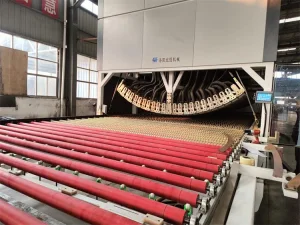
The structural life of vacuum glass is highly dependent on edge-seal reliability. Micro-cracks or surface defects on raw glass sheets will fail under thermal cycling. Highly integrated glass cutting lines and edging tools prepare the flat glass substrate to withstand high mechanical stresses.
Because the inner chamber of VIG contains a high-level vacuum, atmospheric pressure exerts a force of approximately 10 tons per square meter on the glass sheets. To prevent the sheets from collapsing into contact, micro-spacers (usually high-strength stainless steel or ceramic alloy spheres of 0.3mm to 0.5mm diameter) are positioned in a precise geometric grid. Our line design supports robotic, high-speed spacer deposition arrays that guarantee optical clarity and balanced stress distribution.
The critical barrier is the edge seal. Standard organic seals degrade; therefore, VIG requires inorganic materials like glass frit or low-temperature metallic alloy solder. Our technical roadmap incorporates dynamic continuous evacuation chambers and laser-assisted edge heating to seal the perimeter without losing the structural temper of the glass.
Advanced sensor arrays monitor internal pressure levels in real-time. Continuous inspection lines verify seal integrity and look for micro-leaks, ensuring each unit meets the 25+ year lifespan expectations of standard building materials.
Integrating a vacuum glass production line allows glass fabricators to serve local market demands across diverse application scenarios:
Investing in machinery from Shandong, China, brings significant strategic benefits. Shandong is the global epicenter for industrial CNC machinery and heavy glass-processing equipment manufacture. This regional concentration yields unique advantages:
Navigating global compliance frameworks is central to our export strategy. Our lines are engineered to construct products compliant with international certification bodies:
To support deployment, our global field engineers oversee installation, system integration, and on-site operator training, minimizing time-to-market for your factory.
Supporting Your Project from Concept through Commissioning

Availability: 24/7/365. Specialized designs to match your layout, budget, and local energy codes. Utilizing advanced modeling and CAD software.

Standard precision fabrication, scheduled manufacturing reports, clear tracking updates, and testing verification videos before dispatch.

Online support line, optional on-site commissioning, preventative maintenance services, and lifetime availability of spare parts.

Active support networks across major international trade centers. Partnering with regional agents to deliver localized parts inventories.
A: A standard VIG unit (e.g., 4mm glass + 0.3mm vacuum gap + 4mm glass) with low-E coatings can achieve a U-value of $0.5\text{ W}/(\text{m}^2\cdot\text{K})$ to $0.6\text{ W}/(\text{m}^2\cdot\text{K})$. In comparison, standard double-glazed windows run at approximately $1.1\text{ W}/(\text{m}^2\cdot\text{K})$ to $1.4\text{ W}/(\text{m}^2\cdot\text{K})$, meaning VIG reduces heat transmission by up to 60%.
A: The combination of flat safety tempering furnaces, high-precision washing steps, and exact grid layout of support micro-spacers prevents stress concentration points. Computer-controlled micro-spacer systems ensure that external atmospheric forces are uniformly distributed.
A: Using inorganic metal/glass-frit sealing materials rather than organic polymers prevents gas molecules from permeating the seal. These assemblies are rated to maintain operational vacuum levels for 25 to 30 years under normal environmental conditions.
A: Yes, our control stations are equipped with intuitive multi-language PLC interfaces (English, Spanish, French, Russian). During commissioning, our service engineers deliver hands-on training to operational and maintenance staff.
 Yabo CNC