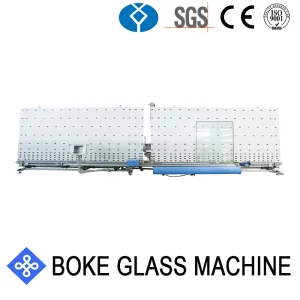
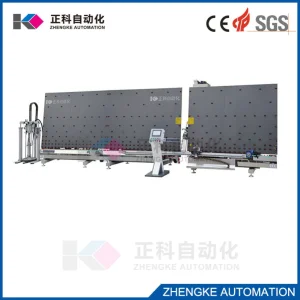
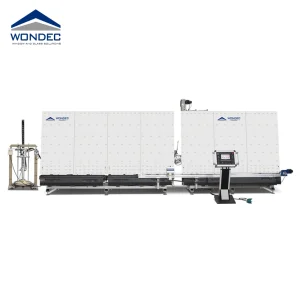
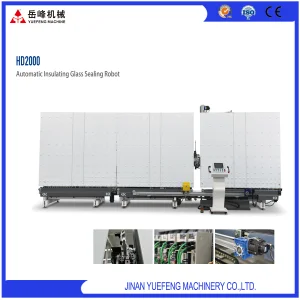
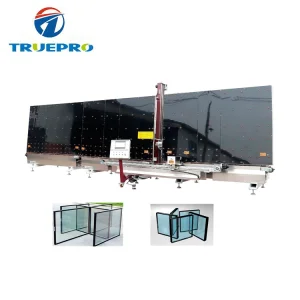
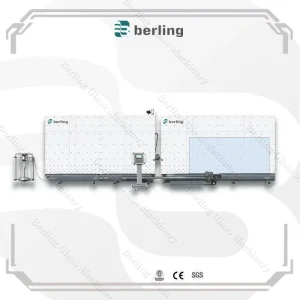
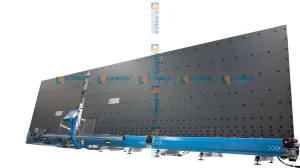
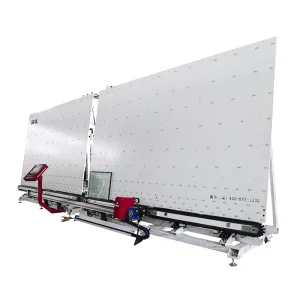
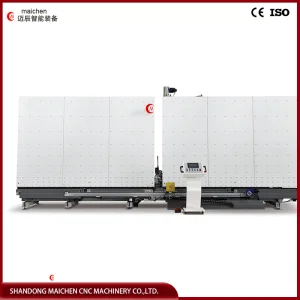
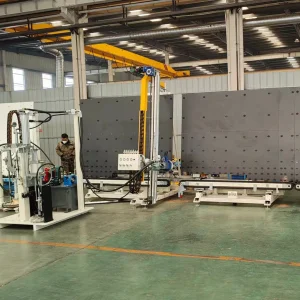
Direct supply lines of highly calibrated, heavy-duty vertical glass sealing machinery engineered to handle large structural double and triple glazed units.
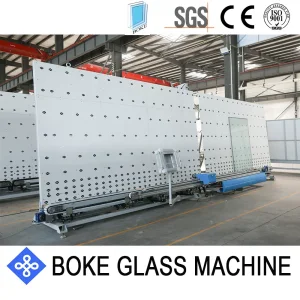
Brisbane’s construction sector is undergoing a profound paradigm shift. With the implementation of the National Construction Code (NCC 2022) and increasingly stringent Queensland Development Code (QDC) parameters, standard single-pane glazing is rapidly becoming obsolete. The commercial real estate boom ahead of the 2032 Brisbane Olympic Games, coupled with residential developments along the Brisbane River and Gold Coast corridors, has driven unprecedented demand for high-performance double-glazed and triple-glazed Insulating Glass Units (IGUs).
Local glass processors face a critical bottleneck: manual application of secondary sealants (such as structural silicones or polyurethanes) cannot consistently satisfy the structural requirements, aesthetic demands, and gas retention standards of modern architectural facades. Variable tropical climates and severe storm patterns in South East Queensland demand flawless sealant integrity. By introducing advanced Insulating Glass Sealing Robots to the factory floor, Brisbane fabricators can secure a continuous extrusion process, prevent moisture vapor ingress, and guarantee structural adhesion that satisfies AS/NZS 4666:2012 (Insulating glass units - Installation and systematic indicator requirements).
"Transitioning from manual sealing to robotic extrusion is not merely a productivity upgrade—it is a regulatory and quality necessity for Brisbane manufacturers striving to win premium tenders."
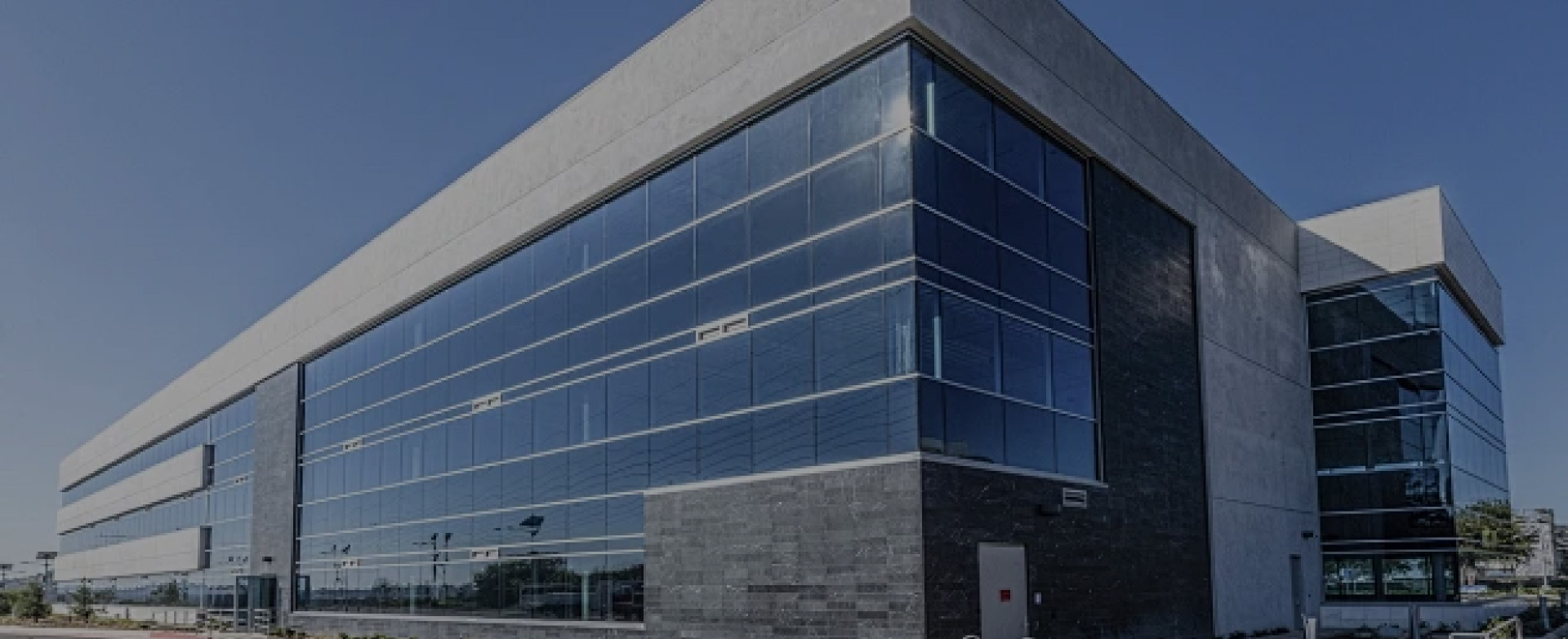
A trusted global supplier of intelligent glass processing equipment, combining 22+ CNC patents with robust service infrastructures across Australia.
Shandong Yabo CNC Machinery Co., Ltd (popularly known as LINGBO CNC) is an industry-leading manufacturer of Insulating Glass Machines and lines with a rich history spanning over 18 years. Driven by strong technical support, rigorous engineering protocols, and responsive after-sales support systems, we have registered exponential global growth.
Our operation is entirely vertically integrated, focusing on design, cutting-edge R&D, precision manufacturing, and holistic after-sales lifecycle services. Our core product portfolio features high-capacity Automatic Insulating Glass Production Lines, Online Argon Gas Filling Systems, high-speed vertical glass washing machines, precision CNC glass cutting tables, and our state-of-the-art automatic sealing robots.
Armed with 22 independent CNC software and hardware patents, our technical team continually innovates to optimize sealant dosage accuracy, reduce structural waste, and deliver industry-leading cycle times that lower the total cost of ownership (TCO) for double glazing manufacturers worldwide.
Years Engineering Experience
R&D CNC Patents Held
Exporting Destinations
Global Remote Support
How we ensure continuous, uninterrupted automated sealing capability for glass factories in Brisbane and the Asia-Pacific region.

7*24 Hours, 365 Days availability. Special custom structural configuration designs for your specific factory floor layout, cycle-time calculations, and glass sizing limits.

Standardized precision manufacturing processes with periodic video reports. Real-time factory acceptance testing (FAT) videos and quality validation checks before dispatch.

On-demand on-site installation, commissioning, and system training in Brisbane. Full remote diagnostics capability and a lifetime spare parts supply guarantee.

Developing local agency partnerships in Queensland and Australia to provide fast-response emergency service visits and quick-delivery critical component stocks.
Procuring raw CNC machinery can be a challenge for Australian companies. LINGBO CNC breaks down typical barriers through highly structured quality assurance and direct import compliance configurations. By leveraging China’s extensive industrial manufacturing ecosystem in Shandong, we manufacture advanced mechanical structures at a competitive price point, without compromising on critical components.
All automatic sealing robots built for Australian destinations feature globally supported, top-tier electrical controls, including Yaskawa servo motors, Siemens PLC control modules, and SMC pneumatic systems. This guarantees that your local maintenance technicians can easily procure diagnostic services or parts locally if required.
Furthermore, our machinery is fully calibrated for typical Australian electrical specifications (415V, 3-phase, 50Hz) and complies with local factory safety laws (OH&S guidelines). Through pre-shipment calibrations, we configure the robots to seamlessly process sealants used widely in the domestic market, such as Dow Corning (DOWSIL), Sika, and Bostik, ensuring immediate operational integration.
Review our complete spectrum of automatic glass lines, featuring multiple dosing pump configurations, dynamic depth sensors, and high-speed operation cycles.
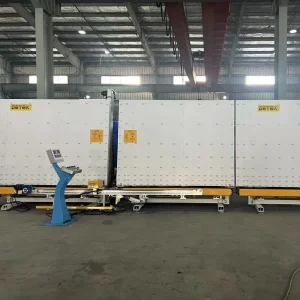
One of the primary challenges in structural glass fabrication is maintaining consistent sealant depth and profile at the corners of the double-glazed unit. Manual gunning often leads to over-deposition or under-deposition at corner junctions, creating thermal bridges or weak points where the secondary seal could separate. LINGBO’s CNC automated sealing robots solve this via real-time linear monitoring and precision dynamic corner rotation mechanisms. The extruder head adapts seamlessly to square, rectangular, and irregular structural shapes, regulating the extrusion rate in ratio to its travel speed to produce flat, smooth edges that require no manual touch-up.
Commercial glass manufacturers in Brisbane often alternate between different structural sealants. For example, residential projects might use cost-effective polyurethane sealants, whereas commercial high-rises specify structural silicones due to their high UV performance and thermal resilience. The LINGBO Sealing Robot with a dual-dosing system enables factories to load both structural silicone and polyurethane/polysulfide simultaneously. Transitioning between sealants is achieved electronically via the PLC console without requiring a complex flush-and-change process, slashing downtime from hours to minutes.
Industry 4.0 is transforming modern factory ecosystems. LINGBO's CNC platform is designed with open architecture, facilitating data exchange with leading manufacturing execution systems (MES) and enterprise resource planning (ERP) systems. The robot scans the glass dimensions via inline optical sensors, adjusts spacer depth settings automatically, calculates the volume of sealant required, and logs compliance data for quality assurance documentation. This digital signature is vital for structural glazing projects that require strict adherence to Queensland construction liability mandates.
Get answers to common queries regarding shipping, installation, and operation of automated sealing machinery in the Australian market.
Our sealing robots are fully compatible with structural silicones, polyurethanes, and polysulfides. LINGBO machines feature highly stable pressure valves and chemical-resistant dosing systems to ensure accurate delivery of dual-component sealants commonly utilized in Australia (such as DOWSIL 982 or SikaGlaze products).
We provide full-service export options including FOB, CIF, and DDP terms directly to the Port of Brisbane. We pack all heavy-duty components inside steel shipping frames with vacuum-sealed moisture barrier protection to prevent damage or corrosion from sea transit. Our logistics specialists assist with custom import documentation, compliance certificates, and tariff declarations.
Yes, all LINGBO CNC sealing robots feature automated depth scanning and multi-cavity sensing. The system automatically measures the spacer depth for double and triple glazed units, adjusts the head alignment, and completes dual-cavity sealing cycles in a single continuous process without requiring manual machine recalibration.
Typically, installation and commissioning are completed within 5 to 7 days upon delivery of the machine to your factory floor. Our technical service engineers (or certified Australian agents) will handle the mechanical assembly, electrical integration, and conduct intensive operational training for your local CNC technicians, covering parameter programming, routine maintenance, and sealant calibration.
 Yabo CNC