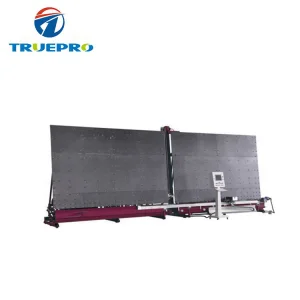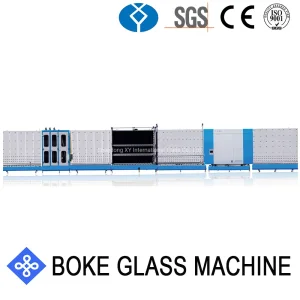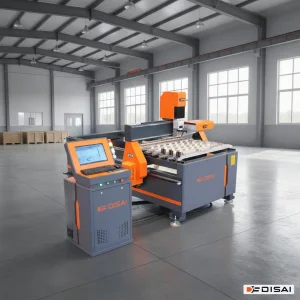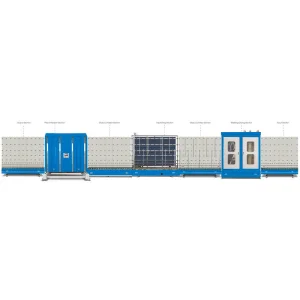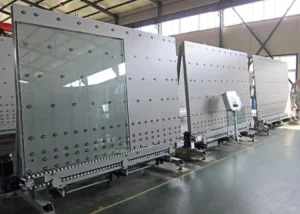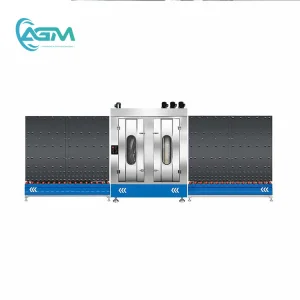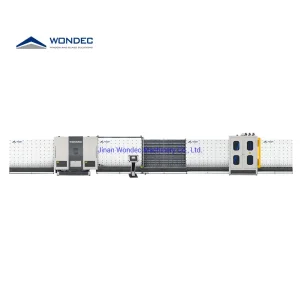
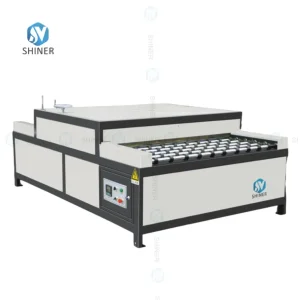
The industrial landscape for Silver Mirror Production Lines has evolved rapidly, driven by strict building codes, architectural design trends, and the soaring demand for energy-efficient materials. Silver mirrors represent the pinnacle of reflective glass technology, combining unmatched reflectivity with exceptional optical clarity. Unlike traditional aluminum-coated mirrors, advanced silver mirrors employ a multi-layered chemical deposit process that guarantees long-term durability and minimal image distortion.
Modern production lines must support copper-free and lead-free coating technologies. This prevents copper oxidation edge corrosion and meets stringent European RoHS and US EPA standards.
Integration of computerized control networks allows mirror manufacturing facilities to run continuously with minimal human intervention, maximizing yield per square meter.
By using dual-layer backing paints applied via precision curtain coaters and high-temperature curing ovens, mirrors survive high-humidity environments like bathrooms and marine fittings.
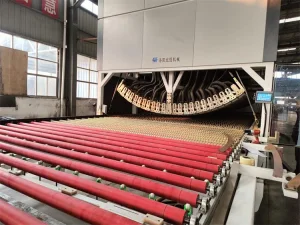
The manufacturing process in a modern silvering line is highly chemical and mechanical. High-quality float glass is first polished using cerium oxide slurry to remove surface impurities at a microscopic level. It then passes through the tin-side sensitization phase using stannous chloride (SnCl2). This step activates the glass surface, allowing silver ions to deposit uniformly from an aqueous solution of silver nitrate and reducing agents. Finally, a protective copper layer (or special chemical passivator for copper-free mirrors) is deposited, followed by two separate runs of protective base and top coats.
Purchasing machinery from specialized Chinese manufacturers like Shangdong Yabo CNC Machinery Co., Ltd offers distinct structural advantages for global buyers. Over the past two decades, China's glass processing machinery ecosystem has achieved unparalleled vertical integration, combining world-class hardware with proprietary software innovations.
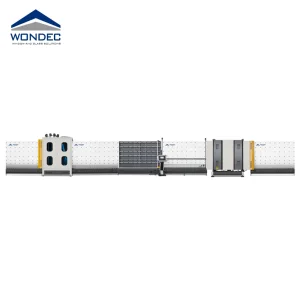
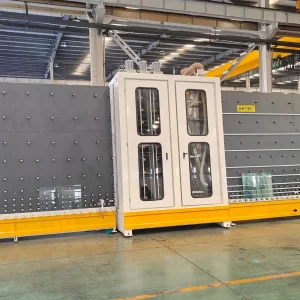
Our company leverages this ecosystem by establishing strict manufacturing tolerances and integrating localized supply chains. For example, our insulating glass production lines, gas-filling robots, and heavy-duty washing machines are engineered with components that match or exceed European standards, yet they are delivered at highly competitive capital expenditures.
Key indicators of Chinese manufacturing dominance include:

Shangdong Yabo CNC Machinery Co., Ltd is a professional manufacturer of Insulating Glass Machine and lines for already 18 years, and now based on the strong technical support and strong after-sell services, we develop rapidly. We are focusing on the high quality machines producing and supplying includes the focuses on the design, R&D, manufacture and after-sell service.
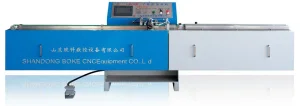
Our key machines is Automatic Insulating Glass Machine, Insulating Glass Line with Argon Gas Filling Function, Automatic Glass Sealing Machine, High Speed Glass Washing Machine, Glass Cutting Machine etc the complete glass deep processing machines. We have already 22 patents for our products, and now still keep in moving.
More than 20 years experienced technical team, unique hardware and software patents, professional after-sales service team. We structure our services to ensure seamless deployment and operation.

Service Time: 7*24 Hours, 365 Days;
Special Design for Your Special Requirement;
We Use the Latest Equipment and Technology;

On-line Service: 7*24 Hours, 365 Days;
Can Come for Installation if necessary;
Can Come for Maintenance if necessary;
Spare Parts Supply for the Whole Machine Life.

Standard Precision Produce;
Orders tracking Report or Videos;
Orders finished Report or Testing Videos.

Supply Reliable Local Service System
Machine Lifetime Service and Maintenance
Looking for Global Agent Partners
Depending on geographical conditions, industrial mirrors are subjected to vastly different mechanical and chemical stresses. For instance, in hot and humid coastal regions (e.g., Southeast Asia, Central America), silver mirrors without optimal backing paint degrade rapidly due to atmospheric salt spray. In contrast, cold Northern European climates demand insulated glass systems (DGU/IGU) containing low-emissivity (Low-E) or silvered layers to prevent thermal loss. Sourcing a robust line that can customize the protective coatings is crucial for manufacturers catering to these diverse global regions.
We analyze the critical trends shaping mirror production and architectural glass fabrication today:
For industrial buyers, investing in a glass deep processing or silvering production line is a capital-intensive decision. Ensuring high Information Gain and minimizing investment risk involves examining multiple performance metrics. Buyers should focus their evaluation on the following critical parameters:
A high-performance line must optimize the consumption of demineralized water (used during glass washing), electricity (curing ovens), and compressed air. Modern lines reuse up to 85% of washing water through multi-stage filtration systems.
Precision silver deposition requires an accuracy tolerance of ±0.05g/m² across the glass sheet. Uniform thickness ensures there are no optical deviations or "cloudy" spots across the mirror face.
Turnkey lines must be modular. Manufacturers with limited initial factory space must have the flexibility to install shorter washing-drying-plating sections and add sealing robots or tempering ovens later.
 Yabo CNC