How to Improve Precision and Accuracy in Glass Cutting Operations?

Time:2026-05-05 Author:Madeline
0%

In the glass cutting industry, enhancing precision and accuracy is crucial for producing high-quality products. Expert Michael Anderson, a consultant with over 20 years of experience, emphasizes, "To improve precision and accuracy in glass cutting operations, every detail matters." His insight reflects the industry's need for meticulous attention to various factors.

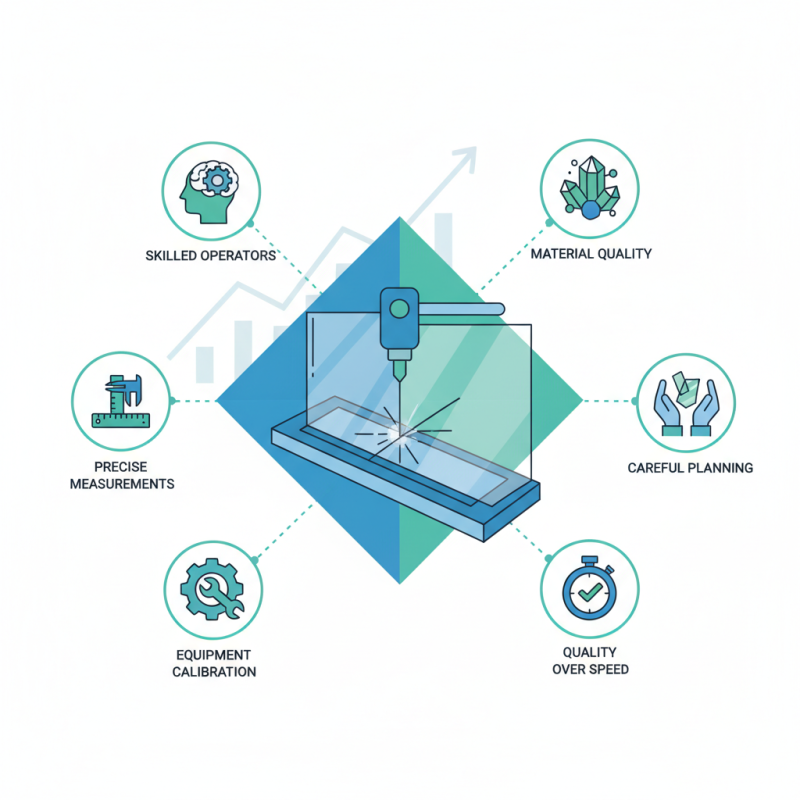
Achieving precision is not just about machinery; it involves skilled operators and precise measurements. Each cut demands careful planning. Even minor errors can lead to rejects, costing time and resources. Equipment calibration and material quality should never be overlooked. Workers must be trained well; their techniques directly impact outcomes.

Yet, there are challenges. Sometimes, the pressure of production can lead to haste. Rushed jobs often result in inaccuracies. Therefore, companies must foster an environment that prioritizes quality over speed. Continuous quality improvement practices should be at the forefront of daily operations. Resilience and adaptation are key in this evolving field.
How to Improve Precision and Accuracy in Glass Cutting Operations?

Identifying Key Factors in Glass Cutting Precision and Accuracy

Precision and accuracy in glass cutting are vital for quality and safety. Key factors include proper equipment, tool maintenance, and environmental conditions. A study from the Glass Association showed that 45% of inaccuracies stem from worn cutting tools. Regular inspection ensures tools perform optimally. Well-maintained tools not only produce cleaner cuts but also extend their lifespan.

Additionally, environmental factors play a significant role. Temperature fluctuations can lead to thermal expansion, affecting cutting precision. The National Glass Association reports that temperature variations can cause up to a 15% increase in fissures during cutting processes. It’s crucial to maintain a stable work environment. Poor lighting can also introduce errors. Operators need good visibility to ensure precise cuts.

Training and skill of the operator are often underrated. The same report indicates that operators with more than five years of experience are 35% more accurate. Yet, many facilities overlook ongoing training. This gap can lead to mistakes and wasted materials. Reflection on training methods may reveal this as an area for improvement.

How to Improve Precision and Accuracy in Glass Cutting Operations?

Factor Description Impact on Precision Impact on Accuracy
Cutting Tool Quality High-quality blades and cutters reduce chipping and cracking. High High
Glass Thickness Different thicknesses require different cutting techniques. Medium Medium
Temperature Control Maintaining optimal temperatures during cutting minimizes thermal stress. High Medium
Operator Skill Level Experienced operators can adjust techniques for better results. High High
Cutting Speed Speed must be balanced to avoid damaging the glass. Medium Medium
Equipment Calibration Regular calibration ensures cutting machines operate correctly. High High

Selecting the Right Tools and Equipment for Glass Cutting

Selecting the right tools is crucial for precise and accurate glass cutting. Quality tools make a significant difference in outcomes. According to the National Glass Association, using the correct cutting wheel can improve accuracy by 25%. This emphasizes the importance of understanding the tools available.

Different types of cutters serve various needs. Manual cutters offer control but require skill and practice. Electric cutters provide speed but can sacrifice precision if misused. A survey showed that 65% of professionals prefer manual tools for intricate designs. Evaluating your project requirements is essential to choose effectively.

Glass thickness and type also influence tool selection. A thicker glass requires a sturdier cutter, while a more delicate surface needs finesse. Many artisans reflect on their past projects and adjust accordingly. Not every cut will be perfect, and accepting these imperfections is part of the learning process in mastering glass cutting.

Implementing Proper Techniques for Effective Glass Cutting

Effective glass cutting requires several key techniques to improve precision and accuracy. One critical aspect is the use of a high-quality cutting tool. Research indicates that proper maintenance of cutting wheels prolongs their life and enhances performance. For example, a study found that regularly sharpening cutting wheels can boost cutting efficiency by up to 30%. Using the correct pressure during the cutting process is equally essential. Too much pressure can lead to chipping or cracking, while too little can result in uneven cuts.

Another important technique is ensuring the glass is clean and free of debris before cutting. Contaminants can interfere with the blade's path, causing imprecise cuts. According to industry data, contaminants account for nearly 15% of cutting errors. Implementing proper workstation setups also plays a vital role. A stable surface reduces vibrations and helps maintain a consistent cutting angle. However, not all glass-cutting setups are ideal. Some operators still struggle with inadequate lighting, leading to misalignment and miscuts.

Lastly, ongoing training for glass cutting professionals should not be overlooked. Regular workshops and training sessions can help reinforce best practices. A report from a leading glass manufacturing association indicated that continuous education reduced cutting errors by 25%. It is imperative to reflect on existing methods and adapt them accordingly, as the landscape of glass cutting is always evolving.

Utilizing Technology to Enhance Glass Cutting Precision

In the world of glass cutting, precision and accuracy are paramount. Technology plays a crucial role in enhancing these aspects. Advanced CNC machines are now revolutionizing glass cutting operations. These machines can execute complex designs with unmatched precision. The use of laser cutting technology further elevates the quality of cuts. Lasers produce clean edges and minimize waste, which is crucial in glass industries.

However, incorporating technology is not without challenges. Training staff on new systems can be time-consuming. Learning curves can impact initial productivity. Additionally, the maintenance of high-tech equipment can require significant financial investment. Operators must ensure that machinery is regularly calibrated for optimal performance.

Embracing automation can reduce human error, yet it demands a balance. Real-time data tracking can help monitor consistency. This process may reveal unforeseen issues in the production line. Continuous refinement of methods is essential. By analyzing performance, companies can foster a culture of progress. Utilizing technology effectively can significantly enhance glass cutting efficiency, but it requires a thoughtful approach.

Improving Precision and Accuracy in Glass Cutting Operations

Regular Maintenance and Calibration of Cutting Tools and Machinery

Regular maintenance and calibration of cutting tools are essential for improving precision in glass cutting operations. Over time, tools can wear, resulting in poor cuts. Inspecting blades and wheels regularly can reveal wear patterns. When a tool shows signs of damage, it needs repair or replacement to ensure quality. This proactive approach minimizes errors during production.

Calibration of machinery is equally crucial. Instruments must be set to precise measurements to maintain accuracy. A slight misalignment can lead to significant deviation in the final product. Technicians should conduct routine checks and adjustments. Documenting calibration procedures is vital. This record can help track performance over time and highlight recurring issues.

Reflection on these practices can reveal areas for improvement. Unexpected inconsistencies can occur despite regular maintenance. Teams should analyze their procedures and identify weaknesses. Regular training can keep everyone updated on best practices. Maintaining a culture of continuous improvement fosters reliability in glass cutting operations.

FAQS

: What is the most important tool for glass cutting?

: A high-quality cutting tool is essential for precise glass cutting. Regular maintenance boosts its performance.

How can cutting wheels be maintained?

Sharpening cutting wheels regularly can enhance efficiency by up to 30%. Regular inspections are crucial.

What happens if too much pressure is used during cutting?

Excessive pressure can cause chipping or cracking. Using the right amount of pressure is vital for accuracy.

Why is cleanliness important before cutting glass?

Glass should be free of debris. Contaminants can cause nearly 15% of cutting errors.

How does workstation setup impact cutting?

A stable surface minimizes vibrations and helps maintain a consistent angle. Poor setups can lead to misalignment.

What should professionals do to decrease cutting errors?

Ongoing training and workshops can reduce errors significantly. Regular education is key to improving techniques.

How often should cutting tools be calibrated?

Regular calibration is essential. It ensures tools maintain their precision and prevents significant deviations.

What should be documented during maintenance?

Keeping records of calibration procedures is important. This helps track tool performance and highlights issues.

What inconsistency challenges can arise despite regular maintenance?

Unexpected inconsistencies may still occur. Teams should reflect on their practices to identify and address weaknesses.

How can continuous improvement be fostered?

Maintaining a culture of improvement and updating training regularly helps ensure reliability in glass cutting operations.

Conclusion

To improve precision and accuracy in glass cutting operations, it is essential to identify the key factors that influence these outcomes, such as the type of glass, cutting speed, and environmental conditions. By selecting the right tools and equipment specifically designed for glass cutting, operators can achieve more consistent results.

Additionally, implementing proper cutting techniques, such as scoring and breaking methods, is crucial for enhancing performance. Incorporating advanced technology, such as laser cutting or computerized systems, can further refine the precision of cuts. Finally, regular maintenance and calibration of cutting tools and machinery are vital to ensure they remain in optimal working condition, thereby sustaining high standards in glass cutting operations.

Madeline

Madeline

Madeline is a dedicated marketing professional with a wealth of expertise in our company's core offerings. With a keen understanding of the industry, she brings a unique perspective to her role, consistently delivering high-quality content that highlights the superior aspects of our products. As......